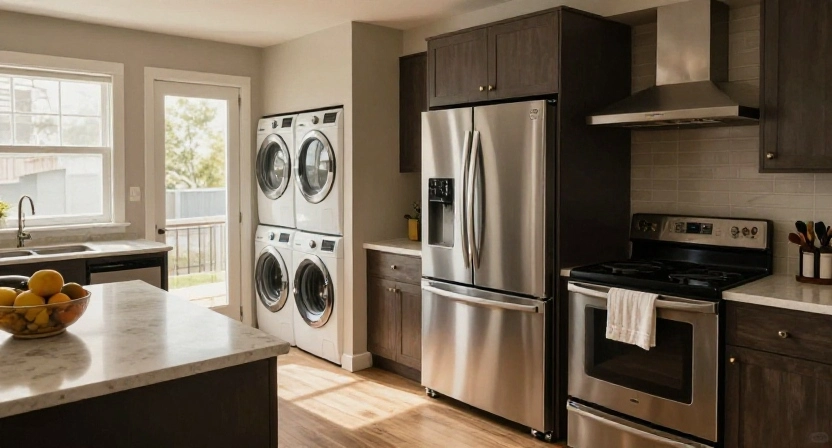
A refrigerator operates continuously, a water heater consistently generates hot water regardless of anyone's awareness, and laundry machines can use both electricity and water multiple times each week. Selecting energy-efficient appliances for daily use can lessen some of that regular consumption without necessitating significant changes to a household's lifestyle. The crucial aspect is understanding which enhancements are significant and how to evaluate them.
Efficiency doesn't just involve purchasing items with an environmentally friendly label or swapping out every functioning device in the home. The actual outcome is influenced by appliance size, technology, usage frequency, local utility rates, and daily habits. For American households, resources like the federal EnergyGuide label and ENERGY STAR certification simplify those comparisons significantly.
Nine appliance categories deserve attention, highlighting where efficient technology significantly impacts and what to consider before investing.
What Makes an Appliance Energy-Efficient?
An effective device delivers the required function while consuming less energy than similar options. That seems straightforward, yet efficiency can stem from various technologies.
A refrigerator could utilize enhanced insulation, a more efficient compressor, and advanced defrost controls. A heat pump dryer reuses heat instead of constantly generating additional heat. A heat pump water heater moves current heat from the ambient air into the water rather than depending solely on electric resistance heating.
For U.S. consumers, two brands are particularly helpful.
EnergyGuide is the well-known yellow tag that appears on numerous major appliances. It offers projected energy usage or efficiency details and enables comparisons with comparable models. The projected yearly operating expense relies on standard assumptions, meaning your actual charges may vary based on local energy rates and your appliance usage.
ENERGY STAR, on the other hand, recognizes products that fulfill energy-efficiency criteria set by the U.S. Environmental Protection Agency. ENERGY STAR encompasses a variety of home categories, such as refrigerators, washing machines, dryers, dishwashers, electric cooking appliances, air conditioners, dehumidifiers, and water heaters.
The differentiation is important. EnergyGuide assists you in comparing usage, whereas ENERGY STAR recognizes eligible high-efficiency items.
1. Energy-Efficient Refrigerators
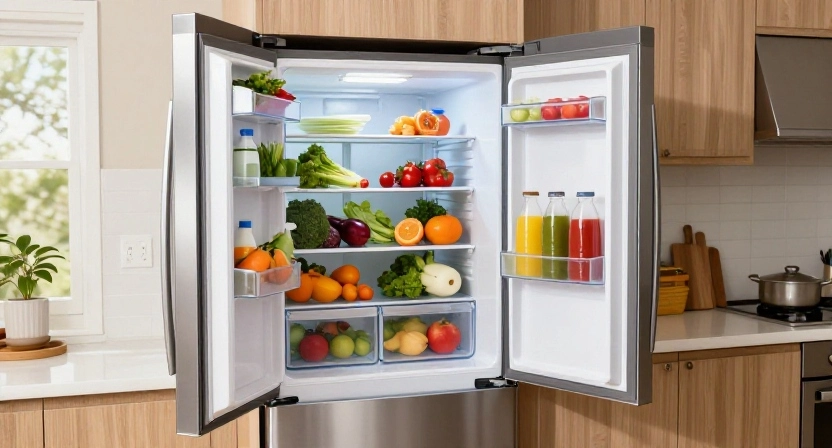 Few home appliances have a more constant role than the refrigerator. It operates on and off daily throughout the year, making efficiency important even if each separate cooling cycle appears minor.
ENERGY STAR indicates that certified refrigerators are roughly 9 percent more efficient than those that only comply with the federal minimum energy-efficiency standards. Models that qualify can utilize technologies like advanced compressors, enhanced insulation, and optimized temperature and defrost systems.
Efficiency, nonetheless, should not lead you to purchase a larger refrigerator than necessary. A very large model still possesses a greater area to cool.
When assessing refrigerators, consider:
-
Projected yearly power usage on the EnergyGuide label
-
Capacity in relation to your household's real requirements
-
Configuration of refrigerator and freezer
-
ENERGY STAR accreditation
-
Measurements and necessary ventilation space
2. Efficient Dishwashers
Washing by hand may seem like the easier choice, but a well-designed dishwasher is made to manage water and energy consumption throughout an entire cleaning cycle.
Contemporary efficiency encompasses more than just minimizing power to the heating component. Dishwashers can utilize enhanced filtration, sensors, more efficient spray systems, and cycle controls to wash dishes using precisely regulated quantities of water and energy.
How you load and use one is important as well. Operating many incomplete cycles diminishes part of the benefit of having an efficient machine.
Instead of selecting a dishwasher solely based on its advertised features, compare the EnergyGuide details across models of comparable size and think about the cycles you will truly utilize. The FTC mandates EnergyGuide details for dishwashers, providing consumers with a uniform framework for comparison.
3. High-Efficiency Clothes Washers
A washing machine influences more than just its energy usage. It also decides the quantity of water that requires heating and the moisture level of the clothes when they go into the dryer.
That second point is simple to miss. A washer that extracts more water in its final spin can lessen the effort needed from the dryer afterward.
For daily use, practical efficiency involves selecting a suitable load size, utilizing cooler water when appropriate for washing, and skipping unnecessary additional cycles. When shopping, evaluate models with similar capacities instead of assuming that the largest machine is always the best option.
A home that frequently cleans large amounts may have distinct requirements compared to a single-person apartment. Aligning capability with real laundry practices contributes to efficiency.
4. Heat Pump Clothes Dryers
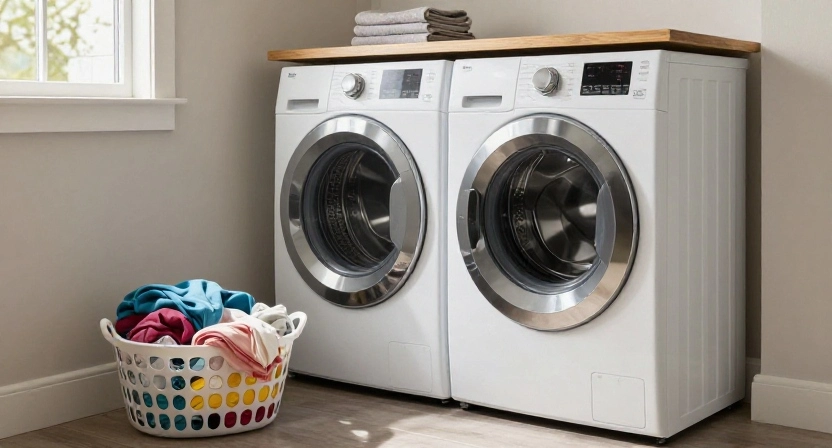
Traditional electric dryers produce heat and expel warm, humid air. Heat pump dryers utilize a distinct method by implementing a heat-pump system and circulating heat during the drying process.
This technology is especially appealing to those seeking options beyond the typical Energy-Efficient Appliances for Daily Use.
There are compromises. Drying performance and cycle durations may vary from conventional machines, and acquisition prices differ significantly among models. Installation requirements require careful consideration, particularly when substituting an existing gas or vented electric dryer.
Efficiency must be taken into account with capacity, space availability, cycle time, power needs, and laundry frequency in the household.
5. Heat Pump Water Heaters
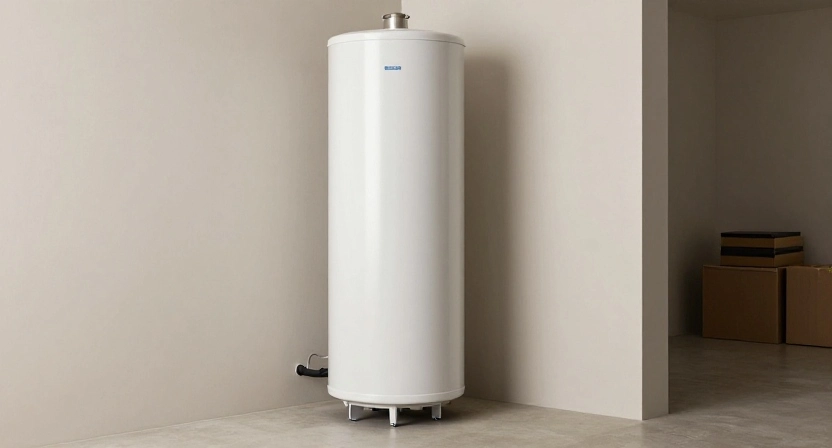
Heating water is a domain where the fundamental technology can have a significant impact.
A conventional electric resistance water heater produces heat directly. A heat pump water heater takes in heat from the surrounding air and transfers it into the tank. ENERGY STAR describes the principle as essentially the reverse of how a refrigerator moves heat. Numerous units are hybrid systems capable of utilizing traditional electric resistance components when the demand for hot water is elevated.
According to ENERGY STAR, water heating represents roughly 12 percent of residential energy consumption, highlighting its significance as a category worth analyzing.
A heat pump system is not appropriate for every residence. Factors such as installation area, ambient temperature, drainage for condensate, electrical supply, domestic hot-water requirements, and site must all be taken into account.
This illustrates why the most efficient appliance in theory isn't always the ideal choice for each installation.
6. Efficient Room Air Conditioners
A window or room air conditioner can turn into one of the most labor-intensive appliances in a home during a scorching summer. Efficiency is important, but sizing is equally significant. An air conditioner needs to be chosen based on the area it is intended to cool, not just by opting for the most powerful model on the market. Functions like variable-speed operation, enhanced controls, scheduling, and sleep or energy-saving modes can aid in minimizing redundant operation, based on the model. Room air conditioners fall under the appliances that feature EnergyGuide labeling, enabling consumers to evaluate energy details instead of depending solely on cooling power or promotional claims. Keep in mind that the appliance is just one element of the cooling process. Poor insulation, direct sunlight in the afternoon, air leaks, and incorrect thermostat settings can increase cooling requirements even if the air conditioner is efficient.7. Induction and Efficient Electric Cooking Appliances
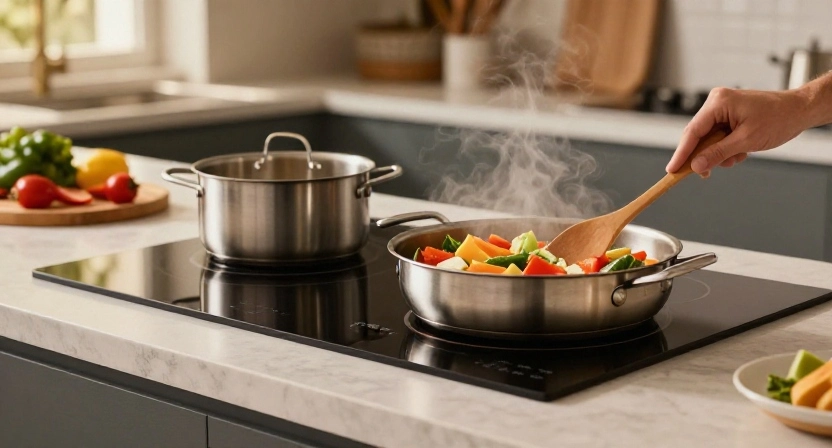 Kitchen efficiency is evolving with advancements in electric cooking technology.
Induction cooktops create a magnetic field that heats compatible pots and pans directly instead of first warming a conventional electric surface and then transferring that heat to the cookware. This straightforward method can deliver quick, responsive cooking, although induction necessitates magnetic cookware like certain cast-iron and suitable stainless-steel pans.
ENERGY STAR has included qualifying electric cooking devices in its collection of residential product categories.
Energy usage must not be the sole factor in purchasing decisions. Consider the compatibility of cookware, the electrical capacity of the kitchen, personal cooking preferences, control mechanisms, ease of cleaning, ventilation requirements, and the costs associated with installation.
For an individual replacing a malfunctioning range, effective electric cooking is a viable option to explore. It may be difficult to justify the financial replacement of a perfectly functional appliance simply for a slight adjustment in cooking energy consumption.
8. Energy-Efficient Freezers
An additional freezer can be beneficial for families that purchase food in large quantities, cook meals in advance, or require extra storage for frozen items beyond what a refrigerator offers. However, it is a different device functioning nonstop. The initial efficiency choice is consequently whether you truly require one. If you decide to, compare freezers of comparable sizes by examining their EnergyGuide information. Purchasing surplus capacity for infrequent use results in maintaining unnecessary interior space at low temperatures all year round. Placement may also be important. A freezer functioning in a suitable environment with adequate airflow performs more efficiently than one exposed to unfavorable conditions. Always adhere to the manufacturer's installation instructions, as permissible ambient temperatures differ by model.9. Dehumidifiers
Dehumidifiers are not as common as refrigerators or washing machines, but they can operate for extended durations in wet basements and humid spaces. They are designed to extract humidity from the air, and effective models strive to achieve this task while minimizing energy use. ENERGY STAR includes dehumidifiers in its certified categories for home appliances. Choose capacity according to the space available and moisture content rather than just picking the biggest machine available. A humidistat that enables the device to react to a specified humidity level can also avoid unnecessary continuous operation. Ongoing moisture may sometimes signal a more significant issue, like water infiltration or inadequate drainage. A dehumidifier can control indoor humidity, but it should not be viewed as a replacement for addressing the root cause when it is present.Which Efficient Appliances Deserve Priority?
Not all appliances warrant the same level of focus. A practical method to rank replacements is to assess the appliance's operating frequency, the inefficiency of the current model, and if a replacement is already warranted.| Appliance | Why Efficiency Matters | Key Buying Consideration |
| Refrigerator | Operates continuously | Annual energy use and appropriate capacity |
| Dishwasher | Uses both water and energy | EnergyGuide data and usable capacity |
| Clothes washer | Affects water heating and drying | Capacity, water use, spin performance |
| Heat pump dryer | Reuses heat during drying | Cycle needs and installation |
| Water heater | Handles a significant household energy load | Technology and installation conditions |
| Room AC | Can run heavily during hot weather | Correct sizing and efficiency |
| Electric cooking appliance | Used frequently in many kitchens | Technology, cookware, installation |
| Freezer | Operates continuously | Capacity and annual energy use |
| Dehumidifier | May run for extended periods | Proper sizing and humidity control |
Ways to Evaluate Energy-Efficient Appliances Prior to Purchase
Buying based solely on the term "energy efficient" is insufficient. Marketing descriptions hold significantly less value compared to standardized information.
Begin with the yellow EnergyGuide label when the appliance type features one. The FTC states that the label aids consumers in comparing a product's energy consumption with that of comparable devices. The operating cost estimate is based on average usage and a national energy price average, rather than an actual forecast of your specific utility bill.
Next, verify if the specific model has ENERGY STAR certification. The official ENERGY STAR Product Finder offers searchable details about eligible products.
Apart from those labels, assess the appliance in relation to your household:
- Select the appropriate capacity. Oversizing can result in paying for functionality that you seldom require.
- Take into account the overall operating expenses. A reduced purchase cost does not automatically mean that a product will be cheaper during years of ownership.
- Verify installation prerequisites. Water heaters, dryers, ranges, and cooling equipment that utilize heat pumps may need particular space, ventilation, drainage, or electrical setups.
- Consider practical application. An enhancement in efficiency is more significant for machinery that operates regularly.
- Examine rewards prior to buying. ENERGY STAR offers a tool based on ZIP codes to identify incentives linked to eligible home upgrades and products. Eligibility and accessible programs differ.