What Makes a Device Useful for Home Automation?
"Smart" and "automated" are not quite the same thing. A smart bulb that can be controlled from a phone is a Wi-Fi bulb. If that bulb automatically turns on after sunset when motion is detected, then switches itself off when the room is vacant, it is participating in an automation. That distinction matters when shopping. Remote control is convenient, but the real value of home automation comes from devices responding to conditions without requiring you to open an app every time. A strong automation device generally has four qualities:- Reliable connectivity: It should respond consistently without frequent reconnection or resetting.
- Useful automation triggers: Schedules, motion, door status, temperature, occupancy, or another device should be able to trigger actions.
- Broad compatibility: Support for your preferred smart-home platform, and increasingly Matter, can reduce compatibility problems.
- Sensible manual controls: A smart home should still function when someone does not have the right phone, app, or voice assistant.
1. A Smart-Home Hub or Controller
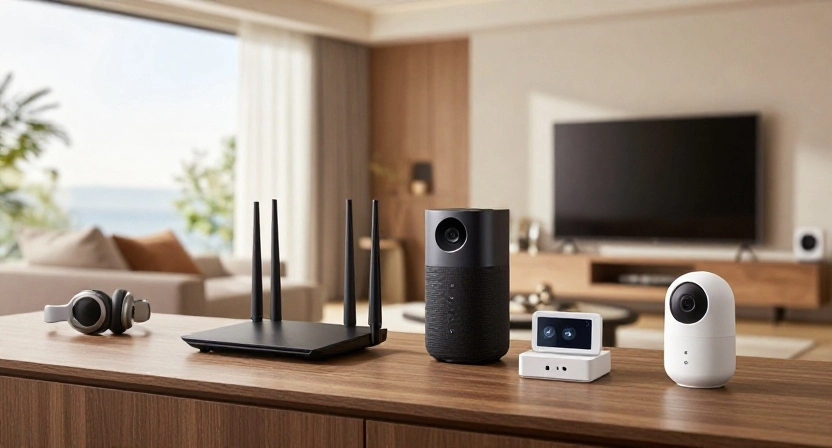
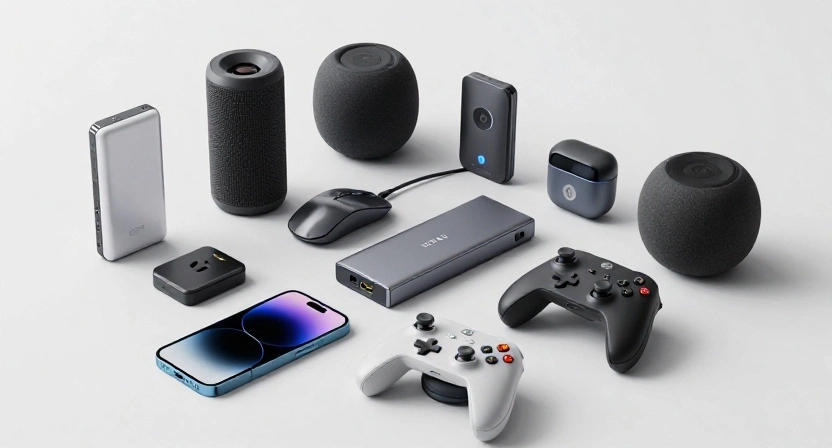
The most important automation device may be the one you barely interact with. A home hub or controller coordinates compatible devices, enables automations, and, depending on the platform, can provide remote access when you are away. Some modern speakers, streaming devices, displays, and routers can perform this role without requiring a separate dedicated hub. For example, Apple says HomePod models and Apple TV can serve as home hubs. A Thread-enabled hub is needed for Thread-based Matter accessories in Apple Home. Google likewise supports Matter through several of its home devices, with certain models also functioning as Thread border routers. Before buying individual sensors and switches, decide which primary ecosystem you want to use. Apple Home, Google Home, Amazon Alexa, and other platforms can overlap through Matter, but they are not identical in features or supported device types. A hub is particularly worthwhile if you want devices to cooperate rather than operate as isolated gadgets.2. Smart Lighting and In-Wall Switches
Lighting is one of the easiest places to create automation that people notice every day. Smart bulbs are useful when you want individual control over brightness, color temperature, or color. Smart switches are often more practical for permanent ceiling fixtures because the wall control continues to feel familiar. Useful routines might include:- Turning porch lights on around sunset.
- Dimming selected lights before bedtime.
- Switching off downstairs lighting after everyone has gone upstairs.
- Using motion sensors to illuminate a hallway at night.
- Turning lights off after a room has been unoccupied for a set period.
3. Smart Plugs for Ordinary Appliances
Not every useful automation requires replacing an appliance. Smart plugs can add scheduled or remote on/off control to suitable plug-in devices such as lamps, fans, decorative lighting, and some small appliances. They are also an inexpensive way to determine whether a particular automation is genuinely useful before investing in a more complicated system. Imagine a living-room lamp that switches on automatically shortly before sunset and turns off at bedtime. The lamp itself does not need to contain any smart technology. Compatibility with the connected load matters. A smart plug's electrical rating and manufacturer instructions determine what can safely be connected. Devices with heaters, compressors, motors, or high power requirements should not simply be assumed to work with any smart plug. For simple on/off tasks, however, smart plugs remain among the most flexible Best Home Automation Devices because they can bring existing equipment into a larger routine.4. Smart Thermostats
Heating and cooling are especially well suited to automation because temperature needs change throughout the day. A smart thermostat can follow schedules and, depending on the model and ecosystem, respond to occupancy, temperature sensors, geofencing, or other conditions. Rather than continuously changing the thermostat by hand, families can establish schedules based on typical wake-up, departure, return, and sleep times. The top thermostat isn't always the one with the most extensive list of features. Compatibility with the home's HVAC equipment comes first. Before buying, check:- HVAC system compatibility
- Wiring requirements
- Whether a common wire, or C-wire, is needed
- Support for remote room sensors if desired
- Integration with your chosen smart-home ecosystem
5. Smart Locks
A connected door lock can automate one of the most repetitive household actions while providing more flexible access management. Depending on the model, smart locks may support app control, keypads, temporary access codes, automatic locking, platform integrations, or other entry methods. Some can participate in routines so that locking a door contributes to a broader "leaving home" or nighttime automation. The useful question is not simply whether a lock connects to a phone. Consider what happens if the network is unavailable, the phone battery dies, or a family member does not use the app. Look for a practical backup entry method, clear low-battery warnings, reliable access management, and compatibility with the existing door hardware. Automation can be useful for locking a door after a defined period, but security-related routines deserve conservative settings. Convenience should never depend on an automation behaving perfectly every time.6. Motion, Contact, and Environmental Sensors
 Sensors are what allow a smart home to understand conditions rather than simply follow a clock.
A contact sensor can report whether a door or window is open. A motion or occupancy sensor can trigger lighting. Temperature and humidity sensors can provide conditions for climate-related routines. Water sensors can alert occupants to moisture in places where a leak might otherwise go unnoticed.
This is where home automation becomes much more flexible.
Instead of telling a hallway light to switch on at 10 p.m., for example, a system can turn it on only when motion is detected after dark. A closet light can respond to the door opening rather than remain on according to an arbitrary schedule.
Sensors are inexpensive compared with many large smart devices, yet they can make existing equipment substantially more useful.
7. Smart Shades and Blinds
 Motorized window coverings are less essential than smart lighting or sensors, but they can automate a task that occurs across multiple rooms every day.
Scheduled shades can open in the morning and close in the evening. More sophisticated routines may respond to time, lighting conditions, or other supported triggers.
They can be particularly useful for hard-to-reach windows and rooms with several shades that would otherwise need to be adjusted individually.
Matter includes support for window coverings, which can make compatible products easier to incorporate into multi-brand smart-home systems.
Because motorized shades can be a larger investment, check power options, physical measurements, control methods, platform compatibility, and what happens if network control becomes unavailable.
8. Robot Vacuums
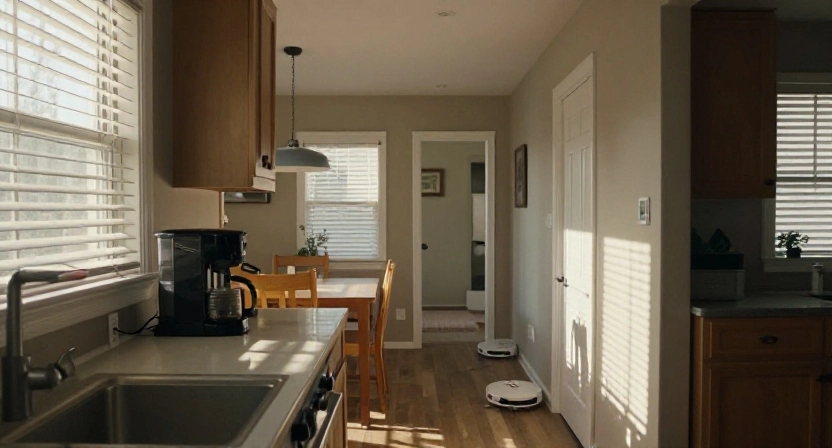
Robot vacuums illustrate the difference between controlling a device remotely and automating an actual household chore. A useful routine might schedule cleaning after people normally leave the house, or start cleaning particular areas under supported conditions. More capable models can map rooms, return to their docks, and perform increasingly sophisticated cleaning routines. Matter's supported device categories have continued to expand, and smart-home platforms have been adding support for additional appliance and cleaning categories over time. Google, for example, documents Matter support for robot vacuums among its expanded device categories. Still, platform compatibility does not mean every feature in a manufacturer's app will automatically become available through Matter. Check exactly which controls your preferred ecosystem exposes before buying.9. Smart Garage-Door Controllers
 A garage door is easy to leave open accidentally, making door status and remote alerts particularly useful.
Compatible smart garage systems can provide status information and, depending on the product and platform, remote control and automation options. Some smart-home ecosystems now support garage-door devices through Matter-related expansions.
This is another category where caution is appropriate. A moving garage door is a large mechanical system, so installation, obstruction detection, compatibility, and manufacturer safety requirements matter more than creating an elaborate routine.
The most valuable feature may simply be knowing whether the door is actually closed.
10. Smart Smoke, Carbon Monoxide, and Water-Leak Devices
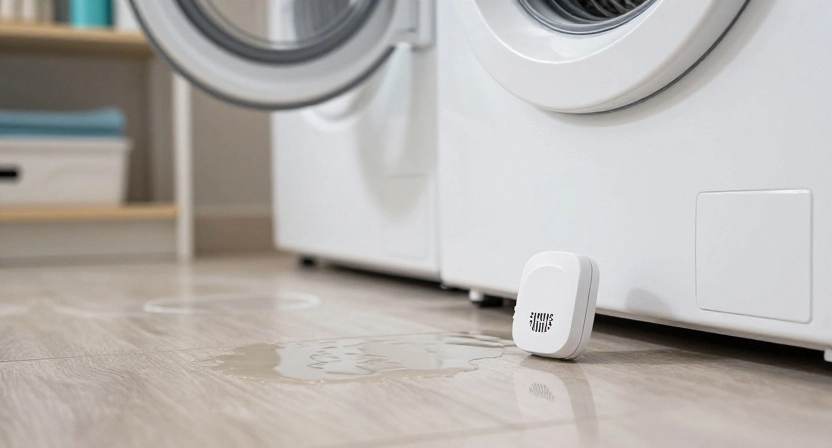 Some connected devices are useful primarily because they can communicate a problem.
Smart smoke and carbon monoxide alarms, compatible listeners, and water-leak sensors may provide alerts or participate in automations depending on the product. Matter has expanded to encompass more safety and environmental device categories, although actual platform support can arrive at different times.
Automation should complement, not compromise, the core safety function of these devices. Smoke and carbon monoxide alarms need to meet applicable safety requirements regardless of whether their smart features are available.
Water sensors are especially straightforward additions near washing machines, water heaters, sinks, or other leak-prone locations. Even without complicated automation, an early notification can be valuable.
Which Devices Should You Buy First?
Trying to automate an entire house at once usually creates more complexity than convenience. A better starting point depends on the problem you want to solve.| Goal | Useful starting devices | Why they help |
| Easier everyday routines | Smart switches, plugs, hub | Automate repetitive on/off tasks |
| Better lighting control | Smart switches, bulbs, motion sensors | Adds schedules and occupancy-based control |
| Climate automation | Smart thermostat, temperature sensors | Adapts heating and cooling routines |
| Entry management | Smart lock, contact sensors | Adds status and access controls |
| Household monitoring | Water, smoke/CO, door sensors | Provides condition-based alerts |
| Less routine cleaning | Robot vacuum | Automates a recurring chore |