
Interesting Facts About Human Biology, Evolution and the Body

Interesting Facts About Human Biology, Evolution and the Body
The human body can seem familiar simply because we live in it every day, but interesting facts about human biology, behavior, and evolution reveal just how unusual we are. From fingerprints that form before birth to a brain capable of interpreting an enormous stream of sensory information, the human body is a remarkably complex system. Some of its most fascinating features are not dramatic at all. They are ordinary processes happening quietly while you read, walk, sleep, eat, or even sit still. Others are evolutionary adaptations that developed over thousands or millions of years as our ancestors moved into different environments. Looking closely at these details changes the way we think about being human, because many everyday abilities have surprisingly complicated biological explanations.

1. Your body contains trillions of human cells

The human body is not one uniform structure. It is an enormous collection of specialized cells working together. Scientists generally describe the human body as containing tens of trillions of cells, although the exact number varies depending on body size and the methods used to estimate it. These cells have different jobs. Muscle cells contract, nerve cells transmit signals, red blood cells transport oxygen, and many other cell types maintain tissues and organs. MedlinePlus That specialization is one reason the body can perform so many tasks simultaneously. Your heart can keep beating while your brain processes language, your immune system monitors for threats, and your digestive system handles food. Even a seemingly simple action, such as reaching for a cup, requires coordinated activity among muscles, nerves, sensory receptors, and the brain.

2. Your fingerprints begin developing before you are born

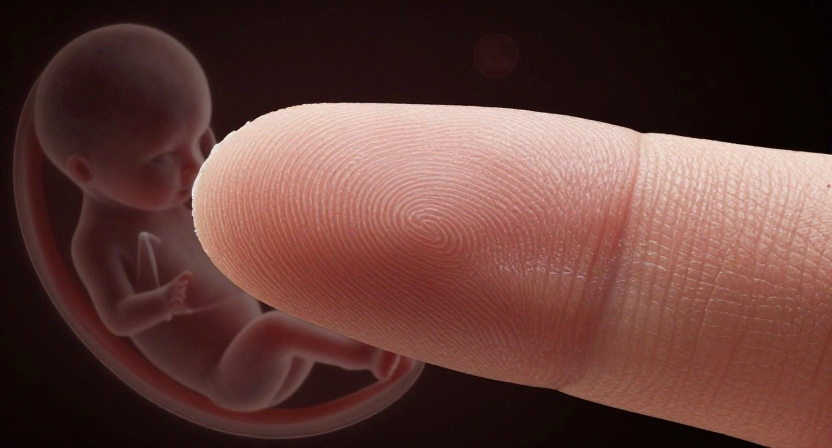
Fingerprints are one of the most recognizable examples of individual variation in humans. The ridges on your fingertips begin developing during fetal development, with the process starting around the third month and the patterns becoming fully formed by about the sixth month. The detailed pattern is influenced by both genetics and conditions in the developing environment. MedlinePlus That is why even identical twins do not have exactly the same fingerprints. The broad patterns may fall into familiar categories such as loops, arches, and whorls, but the detailed arrangement of the ridges is highly individual. These patterns generally remain stable throughout life, which is why fingerprints have long been useful for identification. MedlinePlus Your fingerprints are therefore not simply a genetic blueprint. They are the result of development unfolding in a particular biological environment. Your fingerprints begin developing before you are born, Interesting Facts About Human Biology, Evolution and the Body
3. Your brain weighs about three pounds but does enormous work

The adult human brain is relatively small compared with the rest of the body, yet its responsibilities are extraordinary. The National Institute of Neurological Disorders and Stroke describes the brain as the most complex part of the human body. It interprets sensory information, initiates movement, influences behavior, and supports functions associated with intelligence and memory. NINDS The brain is also divided into specialized regions that cooperate constantly. Visual information is processed in the occipital region, while other areas contribute to movement, hearing, language, memory, emotion, and decision-making. This specialization does not mean each part operates independently. The brain works as an interconnected system. A simple activity such as recognizing a familiar person's face requires multiple processes to happen together.

4. Your body is home to a huge microbial community

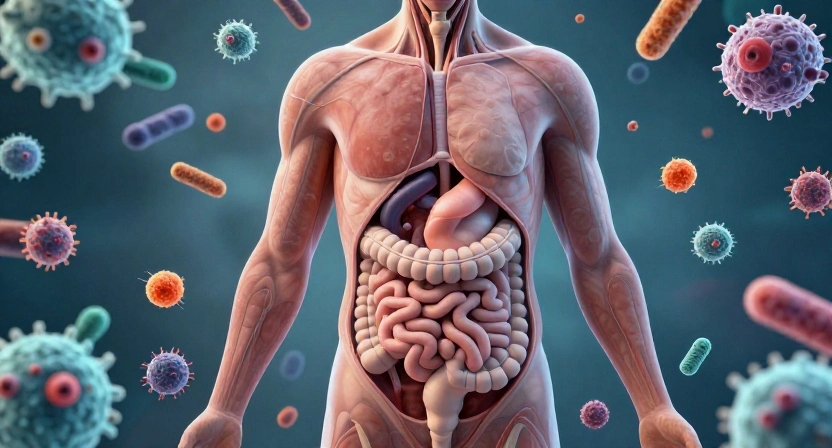
Humans are not biologically alone. Your skin, digestive tract, mouth, and other body surfaces provide homes for communities of microorganisms collectively known as the human microbiome. These communities include bacteria, fungi, viruses, and other microscopic organisms. NIEHS The relationship is more complicated than the old idea that all microbes are harmful. Many microorganisms contribute to normal biological functions. Some help with digestion, interact with the immune system, or occupy environments where potentially harmful microbes might otherwise establish themselves. NIEHS The microbiome also differs from one person to another and can change over time in response to factors such as diet, medications, and environmental exposure. NIEHS So when you think about the human body, it is more accurate to picture an ecosystem rather than an isolated machine. Your body is home to a huge microbial community, Interesting Facts About Human Biology, Evolution and the Body
5. Humans are unusually good at sweating for cooling

Sweating may seem like an inconvenient part of summer, but it is an important evolutionary advantage. Humans have relatively little body hair compared with many mammals, and sweat can evaporate from the skin to remove heat. The Smithsonian notes that this cooling mechanism can help humans continue physical activity in conditions where other mammals may need to stop because of rising body temperature. Human Origins This matters particularly when humans are moving for extended periods. Sweating itself does not cool you simply because sweat is wet. The important step is evaporation. When water on the skin changes into vapor, it takes heat away from the body. That basic physical process helped make endurance activity possible in hot environments.

6. Humans evolved different body shapes in different climates

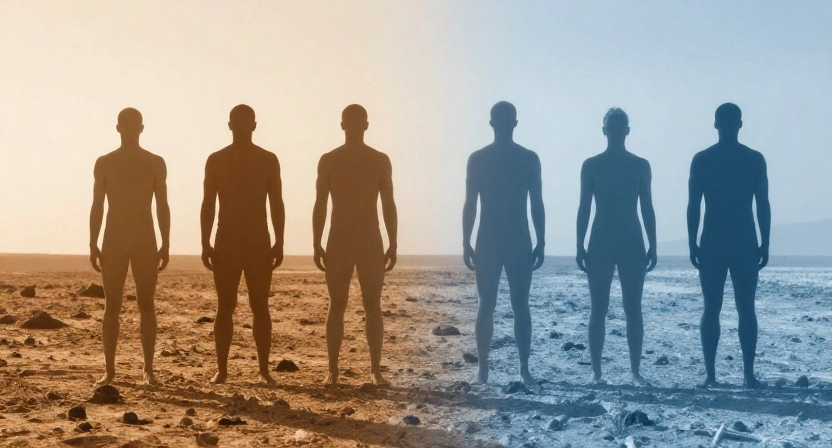
Human bodies have changed over evolutionary time in response to environmental conditions. According to the Smithsonian's Human Origins Program, early human populations living in hot environments evolved body proportions that helped with heat loss. Longer legs and narrower bodies could improve the ability to dissipate heat. In colder environments, shorter and broader body shapes helped conserve heat. Human Origins These differences demonstrate that human evolution was not simply about becoming "better" in a general sense. Different environments created different challenges. A body shape that helped an individual remain cool in a hot climate could have been less useful in a cold one. Human diversity therefore contains clues about the environments in which populations lived over long periods. Humans evolved different body shapes in different climates
7. Cooking changed the human story

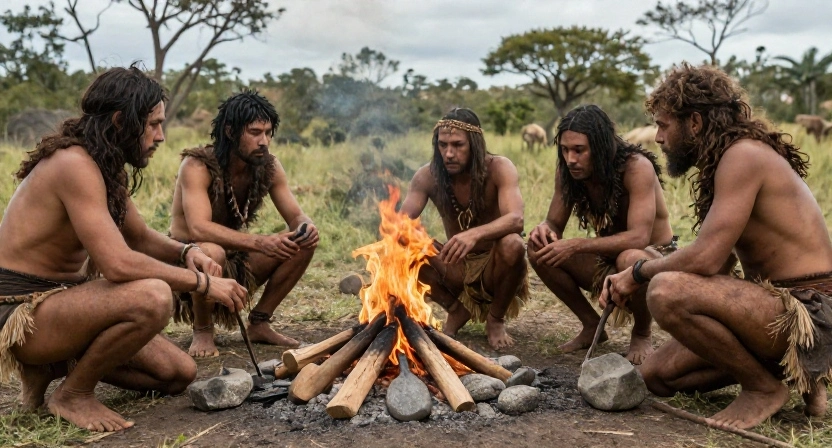
Cooking did more than make food taste better. The Smithsonian reports that human ancestors had long relied heavily on plant foods, which generally require more digestive processing. Over time, changes in diet and the use of cooking were associated with changes in human anatomy and energy use. Cooking makes many foods easier to digest and can make nutrients more accessible. Smithsonian Institution The earliest known hearths date back at least about one million years, although researchers have proposed that controlled cooking may have begun even earlier. Smithsonian Institution This matters because food is not just fuel. What humans can efficiently digest influences how energy can be allocated throughout the body. The development of cooking was therefore a major technological and biological milestone. Cooking changed the human story

8. Your fingerprints are not the only ridges unique to you

The same general type of ridge patterns found on fingertips also appears on the palms, toes, and soles of the feet. These structures are known as dermatoglyphs, and they develop before birth. Although people can share broad pattern types, the detailed arrangements differ between individuals. MedlinePlus This explains why fingerprints are so useful for identification while also showing that the phenomenon is broader than just fingertips. Your hands and feet essentially carry a permanent record of a developmental process that occurred before you were born.

9. Humans walk on two legs, and that comes with trade-offs

Walking upright is one of the defining features of human evolution, but it was not a completely free upgrade. The Smithsonian notes that upright walking changed how weight and forces are distributed through the skeleton. Modern humans can experience problems involving the lower back, hips, knees, feet, and other parts of the musculoskeletal system. Smithsonian Institution The evolutionary benefit was substantial: walking efficiently on two legs freed the hands for carrying, manipulating objects, and using tools. But evolution does not necessarily produce perfect designs. It works with existing anatomy and modifies it over generations. The human skeleton is therefore a fascinating example of compromise. It is highly effective for bipedal movement, but that effectiveness comes with structural trade-offs.

10. The brain does not simply "store" memories like a computer

Human memory is much more complicated than the idea of files being saved in a digital hard drive. Different brain regions contribute to different aspects of learning and memory, and memories can be influenced by attention, emotion, context, and later experiences. The brain's complexity helps explain why remembering something is not always a perfect replay of an earlier event. Human memory is an active biological process rather than a simple recording system. That is also why two people can experience the same event and later remember different details.

11. Your body is constantly replacing and repairing itself

The cells that make up your body do not all have identical lifespans. Some cells are replaced relatively quickly, while others can remain for much longer. The rate of replacement depends heavily on the type of tissue and the function of its cells. MedlinePlus explains that tissues are collections of specialized cells, while organs are formed from groups of tissues working together. Aging affects cells, tissues, and organs over time, with changes in their ability to function and repair themselves. MedlinePlus This means the body is not a static object. It is continuously changing. Even when your appearance seems unchanged from one day to the next, biological processes are constantly rebuilding, maintaining, and modifying your tissues.

12. Your senses are interpretations, not simple recordings

Seeing and hearing may feel effortless, but your brain has to process incoming information before you consciously experience it. Light reaches the retina, sound vibrations stimulate structures in the ear, and signals from these sensory systems are transmitted through neural pathways. The brain then interprets the information. This is why perception is not identical to simply receiving data. The brain's job is to turn physical signals into meaningful experiences: a face, a voice, a color, a sound, or the feeling of touching something. In other words, your conscious experience of the world depends heavily on what your nervous system does with information after it reaches your body.

13. Humans share a surprisingly recent evolutionary history

Modern humans, Homo sapiens, have been around for only a small fraction of Earth's history. The Smithsonian places the emergence of our species at roughly 300,000 years ago in East Africa. Human ancestors, however, had already been evolving for millions of years before modern humans appeared. Smithsonian Institution Our species later spread across the world and encountered dramatically different environments. That history helps explain why humans can live in places ranging from Arctic regions to tropical environments. Culture, technology, clothing, shelter, and biological adaptation have all contributed to humanity's ability to inhabit diverse environments.

14. Human bodies are remarkably similar despite visible differences

People can look dramatically different from one another, but modern humans share a deep biological similarity. The Smithsonian notes that all modern humans have highly similar skull structures, even though visible features such as skin tone, hair texture, and facial characteristics vary. Some of those visible variations developed as human populations adapted to different environments after spreading across the world. Smithsonian Institution This is an important distinction between variation and fundamental biological difference. Human populations contain enormous individual diversity, yet the underlying anatomy and evolutionary history connect us far more closely than outward appearance might suggest.

15. The human body is still full of unanswered questions

Perhaps the most interesting fact about humans is that scientists still do not understand everything about us. Researchers continue to investigate the brain, microbiome, aging, genetics, immune system, development, and countless interactions between biological systems. Modern technology has made it possible to study the human body at levels that previous generations could not observe. Researchers can now create detailed maps of cells within organs and investigate how different cell types interact with their surroundings. National Institutes of Health That means learning about humans is not simply reviewing a finished list of facts. Science continues to revise and expand our understanding.

Why these human facts matter

The most interesting facts about humans are not interesting merely because they sound surprising. They reveal how many layers are operating beneath ordinary experiences. A fingerprint represents prenatal development. Sweating reflects physical adaptation. Walking upright reflects millions of years of evolutionary change. The microbiome shows that human biology extends beyond human cells alone. The brain demonstrates how much processing is required for experiences that feel effortless. Taken together, these details offer a more useful picture of what it means to be human. We are not perfectly engineered machines. We are living systems shaped by evolution, development, environment, genetics, and constant biological change. And that may be the most fascinating part: the human body is familiar because we live with it every day, but it becomes extraordinary when we stop taking its ordinary functions for granted.

Sources

The factual claims in this article were checked against authoritative sources including the U.S. National Institutes of Health, MedlinePlus, the National Institute of Neurological Disorders and Stroke, the National Institute of Environmental Health Sciences, and the Smithsonian Institution.

Leave a Reply

Your email address will not be published. Required fields are marked *

Related post