
Start With Sleep, Because the Next Day Begins the Night Before
Sleep is occasionally regarded as the adaptable segment of a student's timetable. Assignments require more time than anticipated, a program is delayed, notifications keep coming in, or a brief period of scrolling quietly turns into an hour. Bedtime is delayed, yet the morning alarm remains unchanged. For students of school age, that trend may turn into an issue. According to the CDC, children between the ages of 6 and 12 typically require 9 to 12 hours of sleep each day, whereas teenagers aged 13 to 18 need 8 to 10 hours. Sleep requirements for adults, including numerous college students, vary, yet sufficient and regular sleep is still crucial. The real question is not just, "What hour is best for me to sleep?" A more relevant question is, "What continues to delay bedtime?" For one learner, it could be incomplete assignments. Alternatively, it could involve gaming or social networks. Another person might just begin preparing for bed too late. An improved evening routine can start with several simple modifications:- Gather books and school supplies prior to the evening's conclusion.
- Set out garments or other necessities for the morning.
- Establish a clear endpoint for homework whenever feasible.
- Minimize engaging entertainment before going to sleep.
- Remove phones from the bedside if they consistently disrupt sleep.

Make Mornings Easier Before Morning Arrives
Numerous stressful mornings are often generated the evening prior. Picture getting up late and then having to locate an assignment, charge a laptop, select clothes, pack a bag, figure out what to eat, and recall if there's anything special occurring at school. None of those tasks is especially challenging on its own. Working together under time constraints, they can create a sense of urgency before the first class starts. Preparation eliminates certain decisions. A backpack may have a designated spot. Keys, ID cards, headphones, and other commonly used objects can remain in designated spots. Reviewing the schedule for tomorrow tonight can help avoid forgetting items. A productive morning routine doesn't have to include getting up exceptionally early. For many students, the goal should be to have sufficient time to prepare, eat at the right moments, collect essential belongings, and depart without feeling hurried. Incorporating an excessively lengthy productivity routine could merely cut down on sleep. The greatest morning is typically the one that feels nicely uneventful.Build Meals Around Variety Rather Than Food Rules
Online student nutrition can become needlessly complex. Foods are often categorized into oversimplified groups like "healthy" and "unhealthy," while specific ingredients are advertised as though they can significantly enhance intelligence, energy, or academic success. A more balanced approach is less extreme. USDA MyPlate recommendations promote that teenagers consume a diverse range of foods from key food groups, such as fruits, vegetables, grains, proteins, and dairy or fortified soy substitutes. That does not need uncommon ingredients. Breakfast could be oatmeal topped with fruit and yogurt. Another student may choose eggs alongside whole-grain toast and fruit. Lunch might consist of a sandwich or a grain-centered dish accompanied by a protein source and vegetables or fruit. The specific foods will inherently differ based on culture, budget, availability, preferences, allergies, and dietary requirements. Breakfast should be considered with a practical perspective. A student with a diminished appetite right after waking up might consider a smaller or portable choice to be more feasible than eating a large breakfast. The broader habit involves not letting an entire school day rely mainly on whichever snack is most convenient to access.
Make Water Easy to Reach
Students might spend a large part of the day transitioning between classrooms, studying, traveling, engaging in activities, or just neglecting to hydrate until they feel quite thirsty. A simple method to enhance the habit is environmental: ensure water is easy to reach. A reusable bottle in a backpack or on a desk eliminates the need to consistently make the choice to locate a beverage. Topping it up at convenient intervals throughout the day can integrate into an established routine. It's unnecessary to make hydration a competition or think that everyone requires precisely the same quantity. Fluid requirements differ based on factors like age, exercise level, weather conditions, nutrition, and overall health. The practical concept is more straightforward. Water ought to be easily accessible all day instead of being a secondary consideration.Make Movement Part of an Ordinary Day
Physical activity is often perceived as occurring exclusively within structured sports or formal exercise sessions. This can cause non-athletic students to feel that exercise does not seamlessly integrate into their daily routines. Motion can occur in various ways. Walking, biking, dancing, jogging, leisure sports, engaging games, and additional activities can all support a lively lifestyle. U.S. physical activity guidelines advise that children and teenagers aged 6 to 17 should engage in at least 60 minutes of moderate-to-vigorous physical activity daily. Suggestions vary for grown-ups. That exercise doesn't need to resemble a conventional workout. A student may walk some of the way home, play basketball after classes, ride a bike, engage in a school sport, or devote time to another fun physical activity. Enjoyment is important because habits are simpler to maintain when they don't always seem like chores. Physical activity can also serve as an effective link between school and study time. After a long day spent in classrooms, sitting at another desk for several hours right away might not be the most attractive way to start the evening.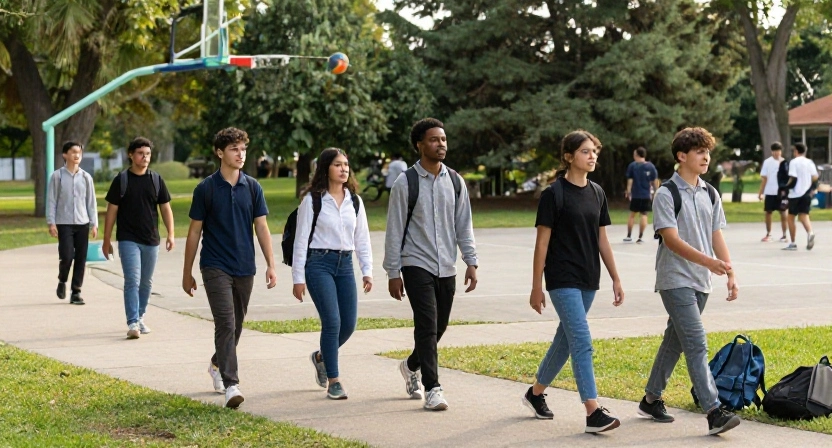
Give Study Time a Clear Purpose
There is a significant distinction between being at a desk and genuinely engaging in study. A learner can have a textbook open while alternating among messages, videos, websites, music, and assignments. Two hours might go by, but not much concentrated work is accomplished. Establishing the objective prior to starting can enhance the focus of study sessions. "Studying biology" lacks specificity. "Examine the portion on cell division, reply to the practice questions, and note anything I still find confusing" provides a definite conclusion to the session. Concentrated study sessions can also be interspersed with true breaks. No universal timer exists that is optimal for all individuals. Certain students favor shorter study sessions, while others are able to focus well for extended durations. The principle is more important than the precise duration of time: focus on a specific task, take a sensible break, and then determine what requires attention next. A break can involve standing, stretching, walking, hydrating, grabbing a snack, or just relaxing for a short while. It doesn't necessarily imply accessing social media.
Make Your Phone Less Distracting Instead of Trying to Avoid Technology
Technology is strongly embedded in education. Students may need phones, tablets, and computers for research, assignments, communication, scheduling, learning apps, and classroom systems. The issue isn't just "screen time." Various forms of screen usage fulfill distinctly diverse objectives. Composing an essay on a laptop does not compare to viewing short-form entertainment clips. Video chatting with a relative contrasts with constantly checking alerts while attempting to work on math equations. A more beneficial habit is managing unwarranted distractions while performing tasks that need focus. This might involve activating Do Not Disturb, shutting unrelated browser tabs, disabling unnecessary notifications, or placing the phone in a spot that necessitates intentionally standing up to get it. Surprisingly, physical distance can be quite beneficial. When a phone is placed next to an open textbook, checking it takes very little effort. If it is on the other side of the room, the student has time to think about whether the interruption is truly valuable. The aim is not to view technology as an adversary. The challenge is to determine when technology aids the task and when it conflicts with it.Create a Clearer Boundary Between Screens and Sleep
The phone next to the bed poses another issue. A student might plan to read one message but then come across another alert, a suggested video, a group chat, or an infinite scroll. Defining bedtime becomes challenging as entertainment lacks a natural endpoint. The American Academy of Pediatrics advises setting limits on digital media use to ensure it does not interfere with vital activities like sleep, exercise, school assignments, and offline hobbies. A nighttime border can be straightforward. The phone could be charged outside the bedroom or further from the bed. Do Not Disturb may start automatically at a selected time. Entertainment applications can be shut down prior to beginning the bedtime routine. Learners do not have to undergo a significant transformation all at once. A person used to sleeping with their phone might find it more feasible to slowly create an earlier cutoff time. What matters is permitting sleep to begin without a steady stream of new information competing for attention.Plan Assignments While They Are Still Manageable
A significant assignment often generates anxiety well ahead of the deadline, yet the tension might stay hidden since the project is labeled as a single task. "History assignment due Friday" seems doable on Monday. However, the paper might necessitate selecting a topic, finding trustworthy sources, reviewing them, formulating an argument, drafting an outline, writing a draft, verifying citations, revising, and submitting the final version. Delaying until Thursday does not decrease the workload. It merely reduces its size. Dividing larger tasks into smaller steps makes progress evident and provides students with more defined starting points. A weekly schedule can also uncover issues before they escalate into emergencies. A test, athletic practice, family gathering, and significant task can each be handled individually. Realizing that they occur within the same two days alters the way the week ought to be organized. An organization cannot eliminate all challenging weeks. It can stop certain challenging weeks from turning overly chaotic.Leave Room for Actual Breaks
A wholesome routine cannot be made up solely of productive tasks. Students require time that isn't assessed through grades, assignments, fitness objectives, or personal development aims. Hobbies, music, enjoyable reading, games, discussions, creative pursuits, and just unwinding can all fit into a typical week. The difficulty lies in differentiating intentional leisure from unintentional time wastage. Viewing an episode of a cherished series following homework serves as a purposeful pause. Launching a short-video app for a few minutes and noticing an hour has vanished might seem quite different later on. Students and adults alike do not utilize their time optimally. The aim is not to oversee every single moment. The goal is to create sufficient space for both duties and leisure so that neither continuously takes time away from the other.Keep Social Connection in the Routine
Students devote a considerable portion of their lives to being with others, but a highly efficient routine may unintentionally regard relationships as interruptions. They aren't. Friends, relatives, schoolmates, educators, organizations, athletic teams, and other groups can offer support, assistance, motivation, and chances to discuss challenges. Relationships are important when issues in academics occur. Requesting a teacher to explain a concept sooner is typically simpler than attempting to regain understanding after weeks of misunderstanding. Communicating with a parent, counselor, reliable adult, or suitable professional can be crucial when stress or emotional challenges become ongoing or disrupt daily activities. Being accountable doesn't mean facing every difficulty by oneself.Build Habits Around Existing Routines
A reason new habits fade away is that individuals depend on recalling them precisely at the right time. Linking a new action to an existing one can facilitate repetition. Once the backpack is packed, review the schedule for tomorrow. After finishing lunch, replenish the water bottle. When you arrive home, take a short movement break before beginning your homework. When the evening alert or notification shows up, place the phone on its charger. These links produce instinctive prompts. Making the desired behavior simple is also beneficial. A water bottle hidden in a cabinet is harder to remember than one set next to a backpack. A phone on the desk is more accessible to glance at than one situated across the room. Effective routines typically rely more on organizing the environment than on exceptional self-discipline, making the healthier option easier to choose.Avoid Trying to Fix Everything at Once
A student opting to entirely transform their life on Monday might establish a routine that appears remarkable and endures until Wednesday. Abruptly rising earlier, working out daily, altering every meal, cutting out social media, studying multiple hours each night, organizing all tasks, and establishing an ideal bedtime results in too many changes simultaneously. It also complicates the interpretation of failure. If the routine fails, which component was impractical? Altering a significant behavior offers a more distinct response. A student who frequently burns the midnight oil could start by setting a more regular bedtime. A person whose homework consumes too much time might initially try putting away the phone while concentrating on tasks. A student who frequently forgets school supplies might develop a five-minute nightly preparation habit. After the initial behavior becomes simpler, another can succeed it. Healthy habits are formed by consistent practice, rather than the intensity of initial days.A Healthy Student Routine Should Be Flexible
No single daily timetable exists that every student must follow. A middle-schooler residing ten minutes from school experiences a different day compared to a high-schooler with sports commitments and a lengthy travel time. A university student managing coursework alongside a part-time job faces different limitations once more. Health issues, family duties, financial situations, school timetables, cultural customs, and personal requirements can also influence what is feasible. For this reason, an effective routine ought to prioritize important tasks instead of demanding strict perfection. Rest requires safeguarding. Dishes ought to offer diversity and sufficient sustenance. Regular physical activity should be an ongoing element of the weekly schedule. Study sessions need to have an objective. Technology shouldn't automatically dominate every free moment. There must also be space for healing and connections. The way those priorities align with the clock can differ significantly.Building a Routine That Lasts
The most effective healthy habits for students are typically so simple that they may not appear remarkable at first glance. Sleeping at a sensible hour, planning for the next day, consuming diverse foods, having water close at hand, staying active, focusing on one task at a time, and setting the phone aside when it distracts are straightforward habits. Their worth derives from repetition. A healthy student routine ought to facilitate school and daily life rather than impose an additional standard of perfection to pursue. Begin with the segment of the day that consistently leads to issues and implement a single realistic change. After that adjustment is well-known, enhance another aspect. As time passes, those minor choices can evolve into the framework that upholds the whole day.Sources
- CDC, Sleep and Health for Students
- CDC, Physical Activity Guidelines for School-Aged Children and Adolescents
- USDA MyPlate, Healthy Eating for Teens
- American Academy of Pediatrics, Media and Children