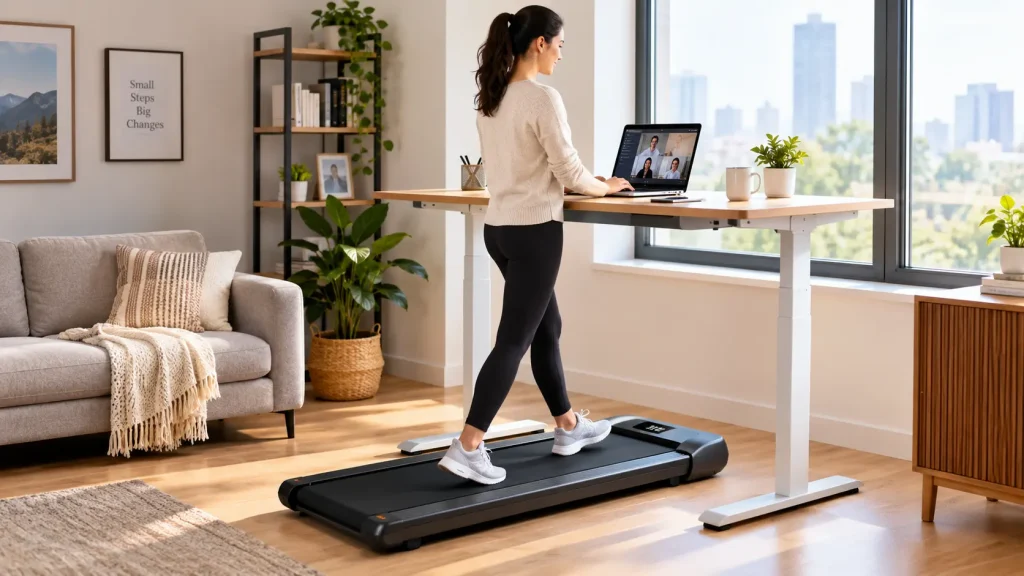
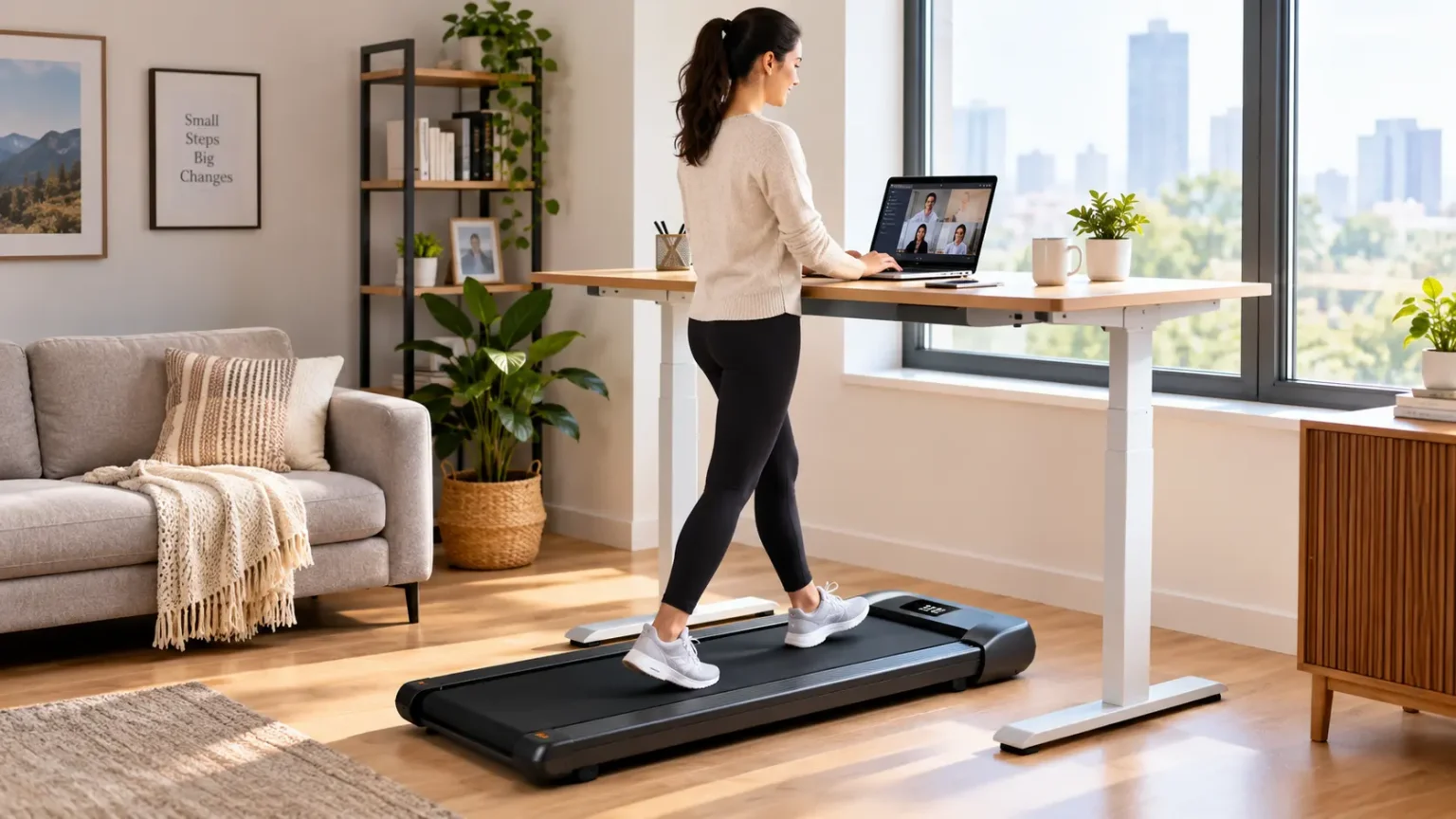
What Exactly Is a Walking Pad?
A walking pad is a low-profile treadmill designed mainly for walking. Compared with a traditional treadmill, it is usually more compact, easier to move, and simpler to store. Some models are designed specifically to sit underneath a standing desk, while others are intended for walking while watching television, reading, listening to podcasts, or simply getting steps indoors. The distinction matters because a walking pad is not simply a smaller version of a full-size treadmill. Most are designed around convenience and everyday walking rather than running or intensive workouts. Traditional treadmills are often built with running in mind. They may have larger decks, higher maximum speeds, substantial frames, handrails, incline systems, and more elaborate displays. A walking pad typically focuses on the opposite idea: keep the machine relatively unobtrusive and make walking as easy to fit into everyday life as possible. That simplicity is a large part of its appeal. A person does not necessarily need to change clothes, drive to a gym, or dedicate a separate block of time to walking. Someone working from home might walk slowly during a meeting, while another person might use it while watching television in the evening. The product's appeal comes from this flexibility: walking can become part of an existing routine rather than another task that has to be scheduled. For many users, one of the biggest practical advantages is not burning hundreds of extra calories, but making it easier to add movement to an otherwise sedentary workday.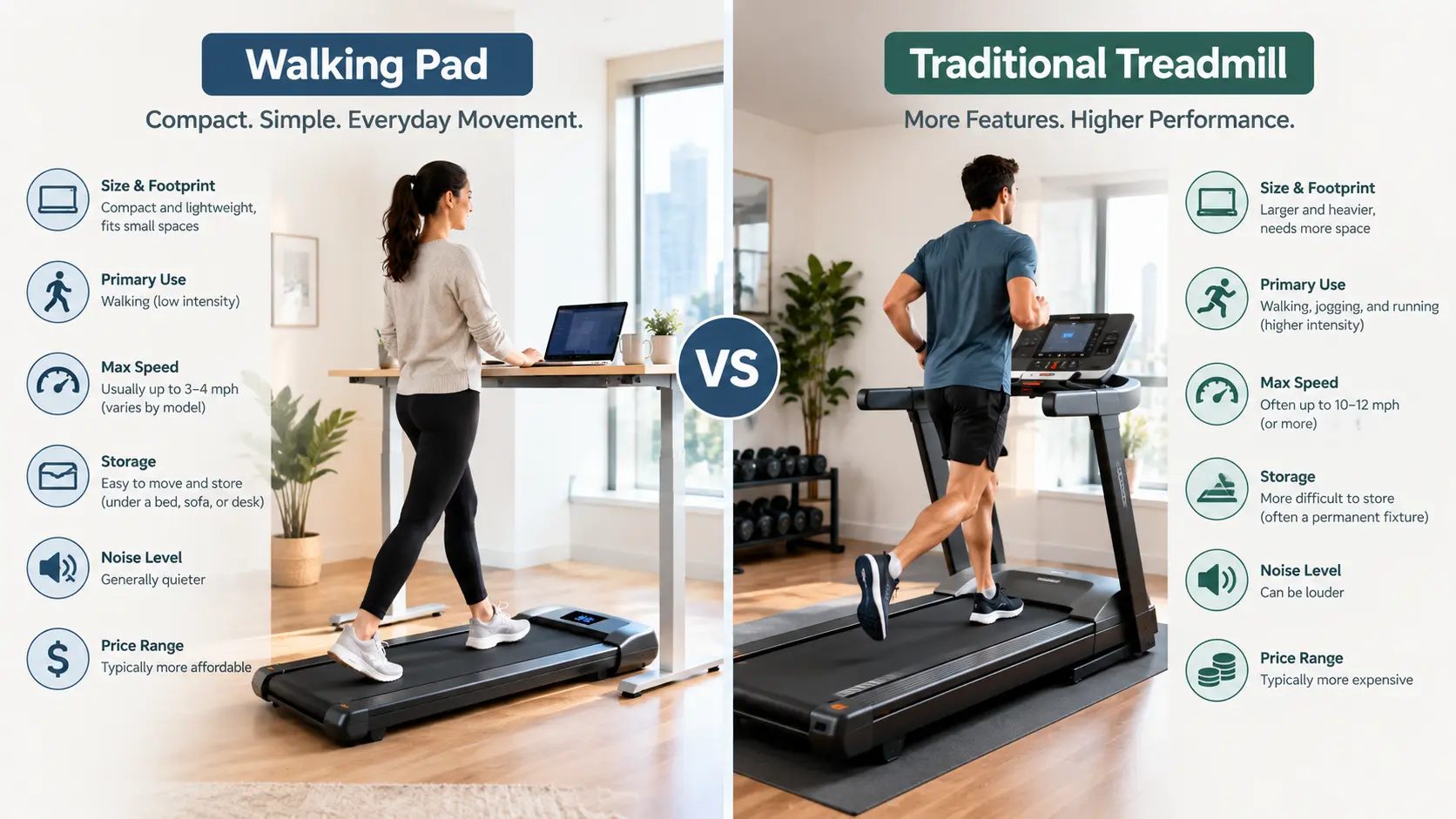
The Real Reason Walking Pads Took Off
The most important part of the walking pad story is not the machine itself. It is the problem the machine solves. For many people, modern work and entertainment involve long periods of sitting. Someone can spend the morning at a desk, drive to an appointment, sit through another task, and then spend the evening on a couch. Even people who exercise regularly may find that much of the rest of the day involves very little movement. Walking pads offer a way to interrupt that pattern without requiring a complete lifestyle overhaul. That does not make a walking pad a magical health device. It makes it a convenience tool. The CDC recommends that adults get at least 150 minutes of moderate-intensity aerobic activity each week, along with muscle-strengthening activity on at least two days. Brisk walking is one example of moderate-intensity activity, and physical activity can be accumulated in smaller periods throughout the week [CDC]. A walking pad fits naturally into that idea because it can make regular movement easier to add to an otherwise sedentary day.Remote Work Changed the Equation
The growth of remote and hybrid work gave walking pads another practical use. When someone works in an office, walking around the building, going to another room, commuting, getting lunch, or walking between appointments can create incidental movement. A person working from home may have fewer of those opportunities. A walking pad provides an obvious substitute for at least some of that lost movement. It is particularly suited to people whose workday revolves around a computer. Instead of trying to find an additional hour after work for exercise, they can potentially accumulate walking during portions of the day when they would otherwise be stationary. Research on treadmill workstations helps explain why the concept has attracted attention. Studies suggest that treadmill desks can increase physical activity and reduce sedentary time, but the benefits can vary depending on the walking speed, workstation setup, and type of task being performed. That last qualification is important. Walking while answering a casual phone call is very different from walking while typing a detailed report. In practical use, walking speed can make a noticeable difference. At slower speeds, activities such as casual calls or team chats may feel manageable, while faster walking can make typing and other precise computer tasks more difficult.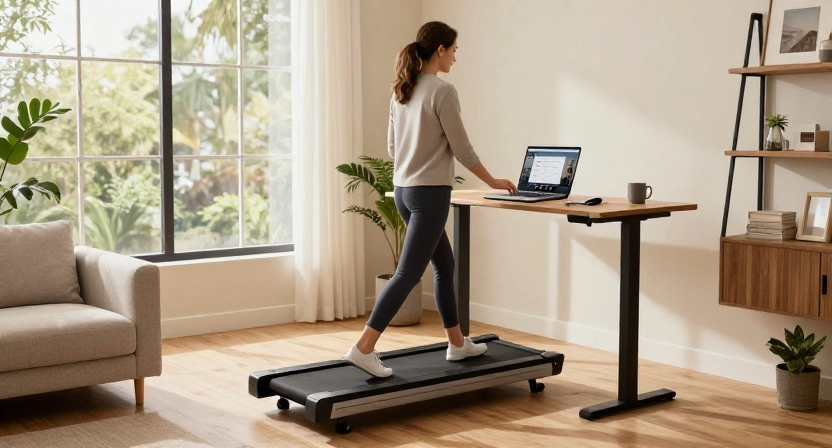
Social Media Made a Practical Product Look Exciting
Walking itself is hardly a new trend. The unusual part is how effectively the walking pad fits modern social media. A conventional treadmill can look like a substantial commitment. It occupies space, resembles gym equipment, and often signals that a workout is about to begin. A walking pad looks different. Videos can show someone walking beneath a desk while answering emails, watching television, listening to an audiobook, or reaching a daily step goal. The product becomes part of a lifestyle rather than a dedicated exercise session. That distinction helped the category spread. The Washington Post reported in 2024 that searches for terms including "walking desk" and "walking pad" had spiked as TikTok creators promoted compact treadmills (The Washington Post). The article also highlighted the broader shift in how consumers discover products, with social platforms increasingly influencing what people buy and investigate. The result is a particularly powerful kind of product discovery: the consumer does not merely see an advertisement for a treadmill. They see someone apparently solving a familiar everyday problem with one. That is much easier to imagine adopting.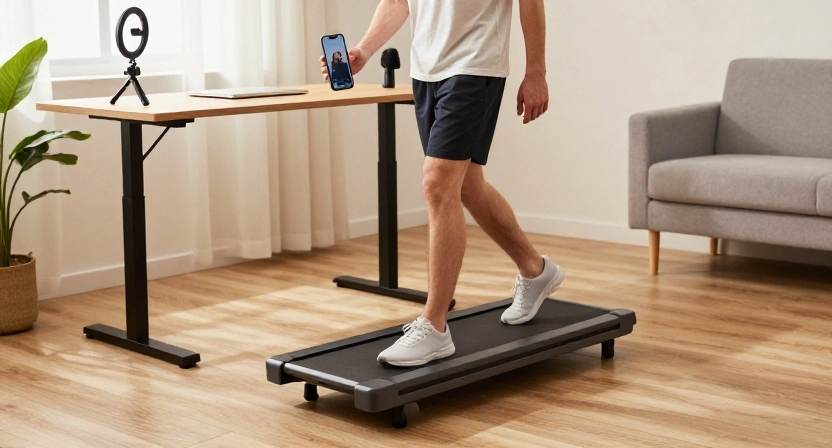
Why the Product Feels More Accessible Than a Gym
Another reason walking pads appeal to some users is that they can make movement feel less like a separate workout. "Workout" can sound like something that requires preparation, effort, and a specific block of time. "Walk for 20 minutes while watching television" feels much easier. That difference may sound trivial, but convenience is often what determines whether a behavior happens consistently. A walking pad also does not demand that someone become a runner or serious fitness enthusiast. Walking is familiar, adjustable, and relatively low impact compared with running. The CDC lists brisk walking among moderate-intensity aerobic activities, although the intensity can vary from person to person. This gives walking pads a broader potential audience than equipment designed around high-intensity exercise. They can make sense for a remote worker trying to move during the workday, an apartment dweller who does not want a full-size treadmill, someone who prefers indoor walking, or a person who simply wants another way to break up long periods of sitting.But Can You Really Work While Walking?
This is where the walking pad trend deserves a little skepticism. Walking and working at the same time sounds ideal, but the two activities can compete for attention and coordination. Research on treadmill desks has produced mixed results depending on the task. Research reviews have found that treadmill desks can affect certain aspects of work performance, including typing speed, while some measures of cognitive performance may remain relatively unaffected [PubMed] Another systematic review found that treadmill workstations can increase physical activity compared with standing workstations, but they may reduce performance on tasks requiring precise hand movements, such as typing and mouse use. In practical terms, that means a walking pad may be excellent for some tasks and inconvenient for others. Walking slowly while listening to a meeting may be relatively easy. Writing a complicated spreadsheet formula, editing a sensitive document, or doing precise computer work may be better done while seated. The smartest users therefore do not necessarily try to walk all day. They choose the moments when walking fits. A practical approach is to divide the workday into “walkable” and “focused” tasks. Routine calls, audio-based activities, and lighter tasks may work well with slow walking, while complex spreadsheets and high-focus creative work may be better done while seated.The Health Benefits Are Real, But They Are Not Magical
Social media can sometimes make walking pads sound like a shortcut to weight loss or better health. Consumers should be careful with those claims. The strongest argument for a walking pad is much simpler: it can make physical activity easier to perform consistently. Research supports some of the basic benefits of treadmill-desk use. A systematic review and meta-analysis of 13 studies involving 351 participants found that treadmill-desk use increased energy expenditure in laboratory settings and reduced sitting time in workplace studies. However, the researchers noted that evidence for broader cardiometabolic benefits was limited. That is useful, but it does not mean that owning a walking pad automatically produces major weight loss or prevents disease. The CDC's broader guidance provides useful context. Regular physical activity has important health benefits, including lower risks of heart disease, stroke, and type 2 diabetes. Adults are encouraged to combine aerobic activity with muscle-strengthening exercise. A walking pad can contribute to that overall picture. It does not replace strength training, outdoor activity, rest, or other forms of movement.The Biggest Advantage May Be Convenience
The biggest selling point of a walking pad may not be speed, calories, screens, or connectivity. For many buyers, the real advantage is simply convenience. The real issue is friction. If an exercise machine is difficult to use, difficult to store, or requires a major commitment, people have more opportunities to avoid using it. A compact walking pad attempts to remove those obstacles. For many buyers, that makes size and storage especially important. A machine that can be moved beneath a bed, sofa, desk, or storage area is fundamentally different from a large piece of equipment that permanently occupies part of a room. For people living in apartments, small homes, dorms, or shared spaces, that difference can determine whether the purchase is realistic. Compact design, easy storage, and compatibility with standing desks remain important considerations for many walking-pad buyers.What Should You Look For Before Buying One?
A popular walking pad is not automatically the right choice for every buyer. The first question should be how you actually plan to use it. If you want to walk while working, consider the walking surface, stability, noise level, remote controls, and whether the machine works comfortably with the height of your desk. If storage is important, the machine's dimensions and weight become more important. If you plan to use it mainly for entertainment, your priorities may be different. You may care more about a comfortable walking surface, easy-to-access controls, and whether moving the machine around the room is practical. It is also important to consider the limitations. A walking pad designed primarily for walking may not be the best choice for someone who wants to run regularly. Some models have limited speed ranges, and compact decks may provide less room to move than a conventional treadmill. Noise is another factor worth considering. One factor buyers often overlook is the difference between motor noise and the sound created by footsteps on the walking belt. Even a relatively quiet motor may still produce noticeable footstep noise during video meetings. A machine that seems quiet in a product demonstration may still produce noticeable noise in a shared apartment, during video calls, or in a room directly above another living space. Because products, prices, warranties, and availability can change, shoppers should compare current specifications rather than rely on an old recommendation.Who Is a Walking Pad Actually For?
A walking pad makes the most sense for someone who has a specific problem it can help solve. It may be especially useful for:- People who work from home and spend much of the day at a desk
- People who live in apartments or other small spaces
- People who enjoy walking but prefer to avoid crowded gyms
- Anyone looking for an indoor option when weather makes outdoor walking inconvenient
- People who want to break up long periods of sitting during the day
- Users who can pair walking with low-attention activities such as phone calls or watching television