A Quick Look at the 10 Most Useful Kitchen Tools
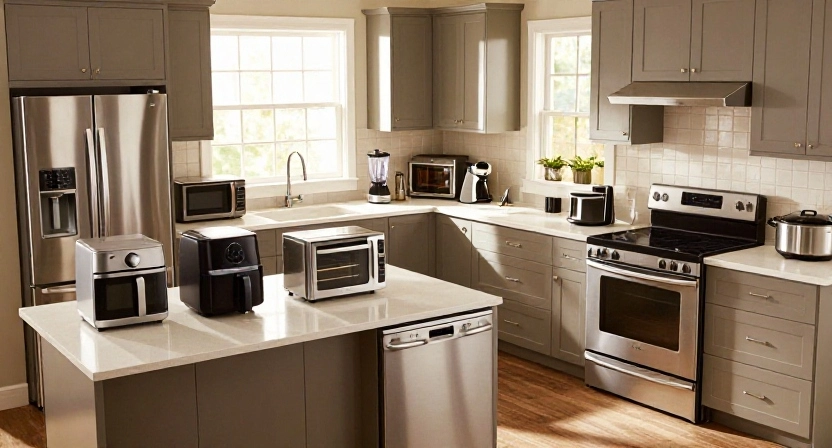
| Appliance | Especially Useful For | Main Consideration |
| Refrigerator | Everyday food storage | Capacity and energy use |
| Range or cooktop | General meal preparation | Fuel type and kitchen setup |
| Dishwasher | Reducing cleanup | Loading flexibility and efficiency |
| Microwave oven | Reheating and quick cooking | Interior size and controls |
| Air fryer | Small portions and crisp foods | Basket capacity |
| Countertop convection/toaster oven | Baking, roasting, toasting | Counter space |
| Blender | Smoothies, sauces, soups | Power and jar design |
| Food processor | Chopping, slicing, shredding | Storage and cleanup |
| Coffee maker | Daily coffee preparation | Brewing style and capacity |
| Slow cooker | Hands-off meals | Long cooking times |
1. Refrigerator: The Appliance That Never Truly Stops Working
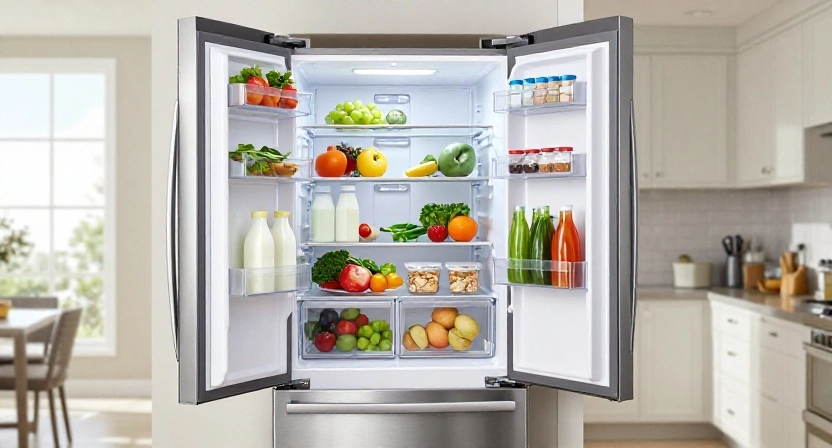
The fridge is among the most essential appliances in the kitchen. It runs all the time, keeps fresh foods cool, keeps leftovers from going bad, and usually has a space just for the freezer.
Choosing the biggest refrigerator that fits in the room isn't always the best choice. The arrangement of a space's interior can be equally significant as its capacity. How well the space is used depends on adjustable shelves, useful door bins, easy-to-reach drawers, and how the freezer is organized.
Energy efficiency is also important when comparing refrigerators. The U.S. The Environmental Protection Agency's ENERGY STAR program recognizes refrigerators as meeting specific energy-efficiency standards. Examining the yellow EnergyGuide label can assist individuals in comparing the anticipated energy usage of various models.
Features like through-door ice, Wi-Fi connectivity, multiple cooling zones, and touchscreen panels might be handy, but they should come after the basics: right size, enough storage space, good energy efficiency, and a layout that works well in the home.
Quick Takeaway:
- Pros: Runs continuously to keep food safe; large capacity for storing multiple items at once; energy-efficient models are available, like ENERGY STAR-certified ones.
- Downsides: It uses a lot of room on the floor; adding fancy features like ice makers and touchscreens makes it more expensive and increases the chance of needing repairs.
2. The essence of daily cooking is found in the Range or Cooktop
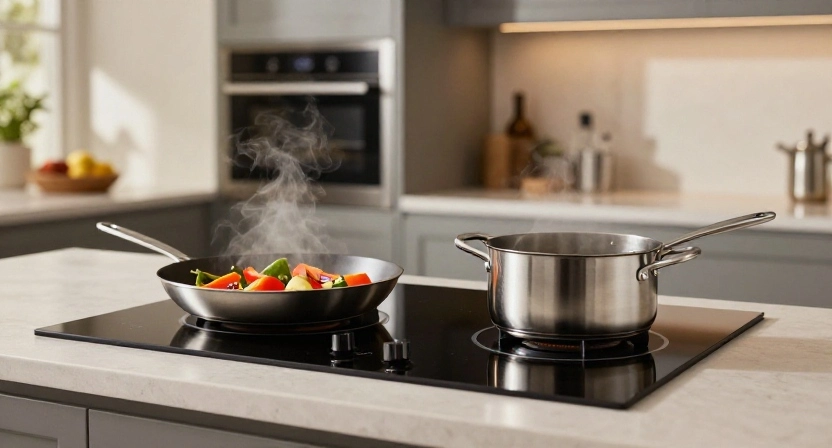 For families that often cook, having a dependable stove or range is really hard to find a replacement for. It can handle techniques that specialized countertop appliances can't fully cover, like simmering tomato sauce, boiling pasta, sautéing vegetables, and searing meat.
Gas, traditional electric, and induction stoves each function in unique ways. Flame is ignited by the gas, prompting a change. Conventional electric cooktops are commonly known and work well with standard pots and pans. Induction heating employs electromagnetic energy to directly heat compatible cookware instead of first warming a standard heating element.
Induction cooking provides precise control, but it's important to ensure your cookware is suitable before using it. Although magnetic stainless-steel and cast-iron pans frequently benefit from induction, certain aluminum or copper cookware requires an induction-compatible base.
Quick Takeaway:
- Pros: Can manage all main cooking methods like simmering, searing, and boiling; induction settings provide accurate temperature control and are energy efficient.
- Downsides: Induction cooking needs cookware that works with magnetism; gas stoves need proper ventilation and a gas line setup.
3. Dishwasher: A Useful Improvement for Daily Cleaning
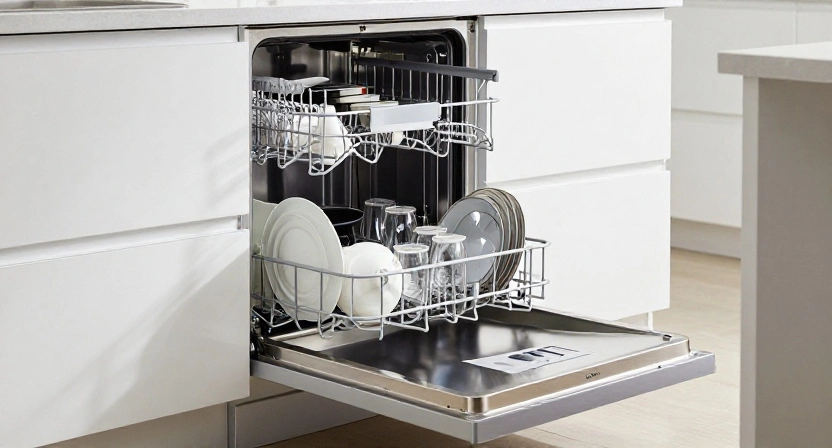 A dishwasher is especially helpful in a home where meals are prepared often. Its real benefit is not just about not having to wash hands. It lets you clean plates, tools, cooking equipment, and preparation items all at once, which gives you more time to do other things.
Modern dishwashers may feature soil sensors, better filtration, more effective spray systems, and customizable rack setups. ENERGY STAR says that models that are certified need to satisfy the efficiency standards for using energy and water.
Loading design requires careful examination when evaluating machines. A third rack is designed for utensils and small items, whereas upper racks are suitable for taller glasses, pots, or plates.
The noise level is also important in an open-plan home, especially since the dishwasher might be running while people are working, watching TV, or having conversations nearby.
Rather than emphasizing premium wash modes as the primary feature, prioritize dependable cleaning performance, customizable racks, effective energy and water efficiency, and a design that accommodates the kinds of dishes you frequently use.
Quick Takeaway:
-
Advantages: When utilized properly and at full capacity, it reduces daily cleaning time and uses less water compared to manual washing.
- Cons: Needs a dedicated kitchen setup with proper plumbing; some cheaper models can be loud in open kitchens.
4. Microwave Oven: Remains One of the Quickest Kitchen Assistants
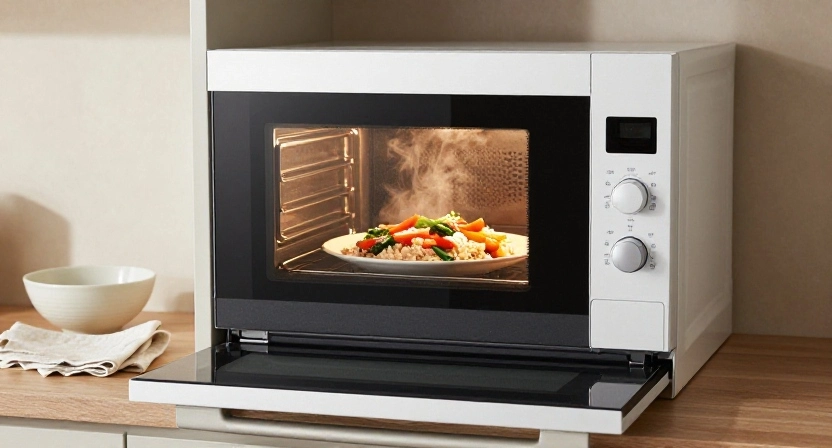 Microwaves might not get as much attention as newer countertop appliances, but they still offer a quick and convenient way to heat or cook food that's hard to match.
They are especially helpful for reheating leftovers, warming drinks, defrosting some foods, cooking vegetables, and finishing small heating jobs without needing to preheat a large oven. The U.S. Food and Drug Administration states that microwave energy is taken in by food and converted into heat. The agency states that microwave ovens meeting FDA regulations are safe to use as long as you adhere to the manufacturer's instructions.
Selecting the right container is important. Depending on the application, glass, ceramic, paper, and suitable plastics safe for microwaves may be appropriate, whereas metal should typically be avoided unless explicitly allowed by the appliance's manufacturer.
For daily use, straightforward controls and a functional interior can be more important than numerous preset options.
Quick Takeaway:
-
Pros: Unrivaled speed for reheating, thawing, and rapid cooking; energy-efficient for minor heating jobs.
-
Cons: Restricted capacity to crisp or brown food; Metal containers must not be used unless authorized by the manufacturer.
5. Air Fryer: Handy When Crunchy Texture is Important
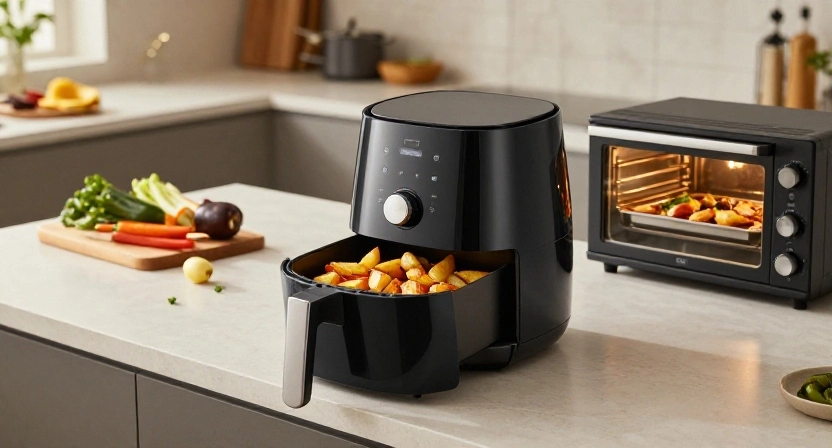
An air fryer is primarily a small device that quickly circulates hot air around food. This is particularly advantageous for dishes where a browned or crispy surface is wanted.
It works well for vegetables, potatoes, chicken pieces, frozen goods, and reheating foods that might become mushy in a microwave.
Since the cooking chamber is quite compact, an air fryer can be handy for heating when using a full-size oven would be unnecessary for the amount being cooked.
The primary constraint is capacity. A small basket might be ideal for one or two individuals but would need several rounds for a bigger family. Crowding can disrupt airflow and diminish even browning.
Safety warrants equal consideration as performance. Countertop cooking devices must be operated following the manufacturer's guidelines, ensuring adequate ventilation and space, and should be verified against the latest U.S. Consumer Product Safety Commission recall and warning notices when applicable.
For individuals who frequently prepare small servings and enjoy crunchy textures, an air fryer can warrant its place on the counter. For an individual who possesses an efficient convection oven and often cooks substantial meals, the justification for the overlap might be more difficult.
Quick Takeaway:
-
Advantages: Produces sharp textures rapidly with little oil; heats up significantly quicker than a conventional oven for smaller servings.
-
Cons: Restricted cooking capacity necessitates batch preparation for families; occupies precious countertop space.
6. Countertop Convection or Toaster Oven: More Adaptable Than Just Toast
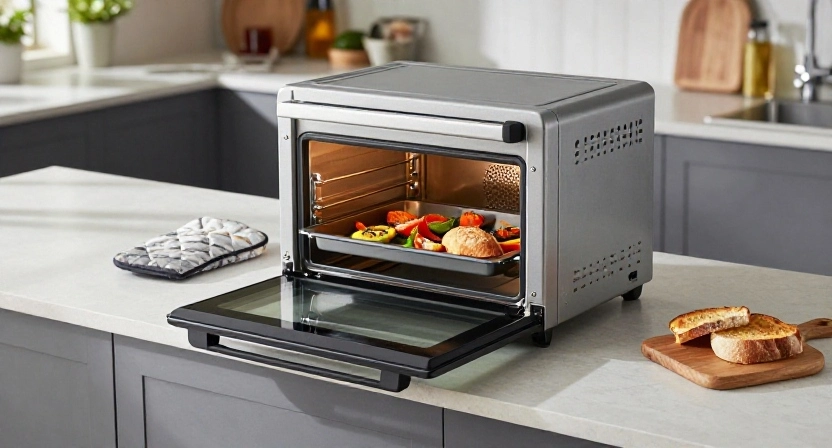
A contemporary countertop oven can serve as a bridge between a toaster and a traditional oven. Based on the model, it can toast bread, bake small items, roast veggies, reheat pizza, broil foods, or employ convection to circulate warm air.
Its greatest strength is size. Cooking two fish fillets or warming a couple of pizza slices doesn't always require a big oven.
The internal measurements are more significant than what the appliance's exterior appearance may imply. Think about what you plan to store in it before making a purchase. A compact model can manage toast flawlessly but might be inadequate for the baking dishes or pizzas you usually prepare.
The tradeoff is clear: countertop ovens need dedicated or regularly accessible counter space. In a compact kitchen, versatility is significant only if the appliance can substitute for enough other tools to warrant that space.
Quick Takeaway:
-
Benefits: Highly versatile (bakes, roasts, toasts, heats up); Can use less energy than a standard oven for smaller amounts, depending on the device and cooking technique.
-
Cons: Needs a fixed, dedicated countertop area; internal space may be too limited for large pans or pizzas.
7. Blender: An Expert That Can Operate Daily
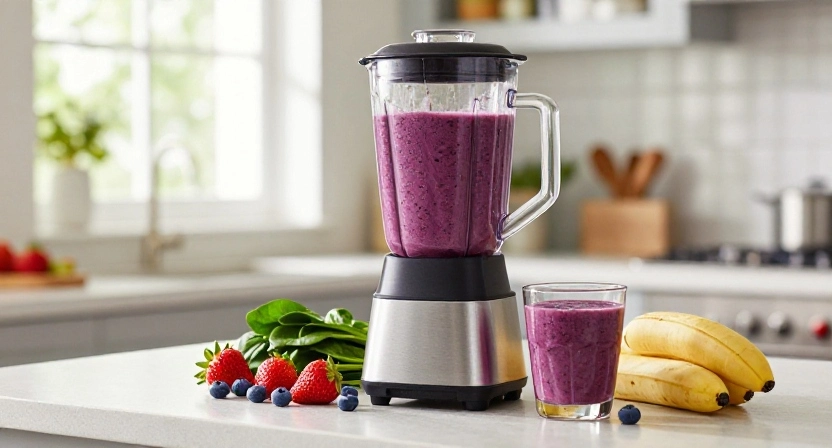 A blender is practical when preparing liquid-based dishes is a common activity in the home. Smoothies are the clear illustration, but a skilled blender can also prepare sauces, dressings, purées, dips, crushed components, and some soups.
Instead of evaluating blenders solely by their advertised motor specifications, consider the overall design. Blade design, jar configuration, effective volume, controls, stability, and maintenance needs all affect the user experience with the machine.
Personal blenders are handy for individual portions and compact kitchens. Full-size appliances typically benefit families, accommodate larger recipes, or provide ample space for ingredients to move around.
Spicy components need special attention. Not every blender jar is intended for hot liquids, and steam pressure can pose a burn risk if a sealed container is improperly used. Adhere to the manufacturer's guidelines for the specific model instead of assuming that any blender is safe for blending hot soup.
Quick Takeaway:
-
Advantages: Ideal for liquids, smoothies, purées, and sauces; rapid in creating smooth consistencies.
-
Cons: Not suitable for chopping solid items or dry preparation tasks; high-wattage motor versions tend to be noisy and large.
8. Food Processor: The Time-Efficient Tool for Dedicated Preparation Tasks
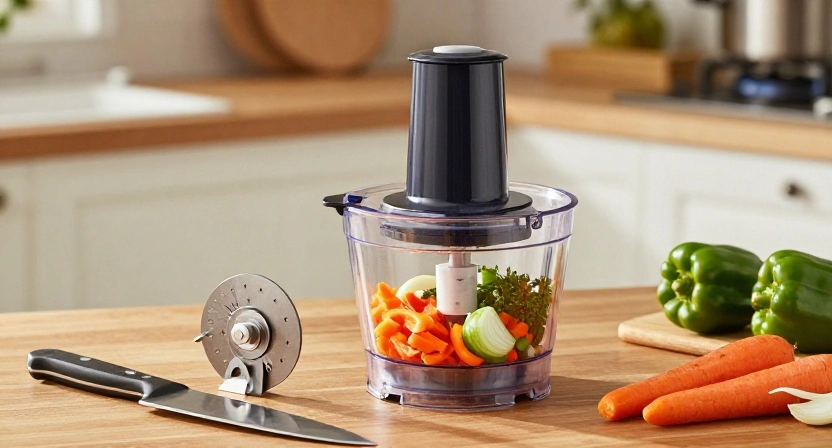
A blender and food processor may appear alike at a glance, but they serve distinct purposes.
Blenders perform best when components must move through a liquid toward the blades. Food processors feature a larger work bowl and interchangeable blades or discs to manage more solid preparation tasks.
Depending on the appliance and its attachments, a food processor is capable of:
- chop vegetables and nuts
- shred cheese
- slice produce
- mix certain doughs
- make breadcrumbs
- prepare dips and spreads
- break down ingredients for sauces or fillings
The benefit is clear when a recipe calls for significant repetitive preparation.
The downside is the cleanup. A processor can include a bowl, cover, blade, feed chute, pusher, and extra discs. Using a knife might still be faster for one chopped onion.
For a sizable batch of cut vegetables, shredded components, or dough, the machine can significantly reduce manual labor.
Quick Takeaway:
-
Advantages: Significantly reduces preparation time for large quantities of chopping, slicing, shredding, and making dough.
-
Cons: Takes a lot of time to clean and put together because of several blades and attachments; excessive for small jobs.
9. Coffee Machine: Justifiable for Frequent Coffee Enthusiasts
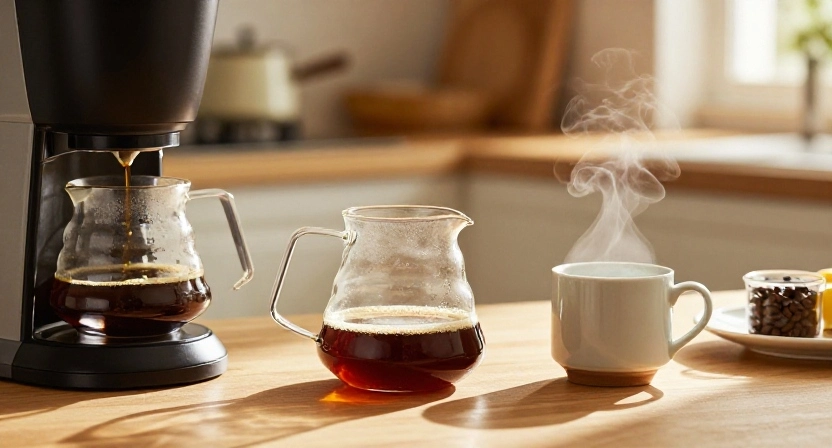 Not every kitchen needs its own coffee machine, but in a household that brews coffee daily, it can rapidly become one of the most frequently utilized small appliances.
Convenience options like programmable brewing can be beneficial, but essential upkeep is equally important. Easily washable removable components and a simple descaling procedure reduce long-term ownership frustrations.
Take into account ongoing expenses in addition to the initial acquisition. Filters, pods or capsules, cleaning agents, and replacement parts can influence the overall expense of operating a machine throughout its lifespan.
Quick Takeaway:
-
Pros: Provides quick, dependable daily brewing at home; more economical than purchasing cafe beverages every day.
-
Cons: Needs continuous upkeep (descaling, filter changes); takes up permanent counter area.
10. Slow Cooker: Effortless Cooking That Pays Off with Preparation
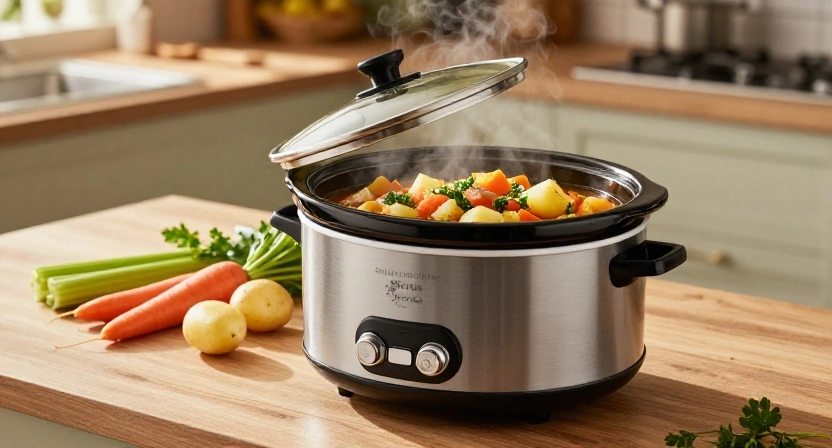
A slow cooker deals with a different problem than a microwave or air fryer.
It is not meant to prepare dinner immediately. Instead, it enables food to cook slowly with fairly minimal supervision.
Soups, stews, chili, sauces, braised meals, and other recipes with high moisture content are ideal choices. The USDA Food Safety and Inspection Service states that slow cookers employ direct heat, prolonged cooking time, and steam within the covered container to safely prepare food when correct methods are adhered to.
Crucial information about food safety exists. The USDA recommends defrosting meat or poultry before putting it in a slow cooker and storing perishable items in the refrigerator until ready to prepare. The warm or hot-holding function of the device should not be considered a cooking option unless specified differently in the manufacturer's instructions.
A slow cooker is ideal for individuals who are able to plan in advance. If most meals are planned 20 minutes prior to dinner, a quicker appliance is likely to see more usage.
Quick Takeaway:
-
Benefits: Minimal effort required for meal preparation; great for tenderizing meat cuts, stews, and soups even when you’re not present.
-
Cons: Needs meal planning several hours beforehand; not ideal for quick or last-minute dinner choices.
Which Appliances Actually Belong in Your Kitchen?
The best 10 kitchen appliances should not turn into a shopping list. Having all ten would be illogical if you often repeat tasks that you rarely do.Before introducing an additional machine, consider some practical inquiries:
-
What is the realistic frequency of my weekly usage?
-
Does a device I currently possess do the same task sufficiently?
-
Is there convenient storage or countertop area accessible for it?
-
How challenging is it to tidy up after regular use?
-
Is the size suitable for my home?
-
Do filters, pods, accessories, or any other consumables require replacement?
-
Are key parts replaceable when they become worn?
-
Is there an active recall or safety alert for the appliance?
For large appliances, energy usage can impact ownership expenses for years. ENERGY STAR presently manages certified categories that include refrigerators, dishwashers, and electric cooking appliances for home use.
Evaluating ENERGY STAR details alongside the appliance's EnergyGuide label can give a clearer understanding than looking solely at the purchase cost.
For countertop appliances, how often they are used is typically the more accurate measure. An affordable device that takes up precious counter space for 360 days annually isn't always a good deal.
Avoid Buying Several Appliances That Solve the Same Problem
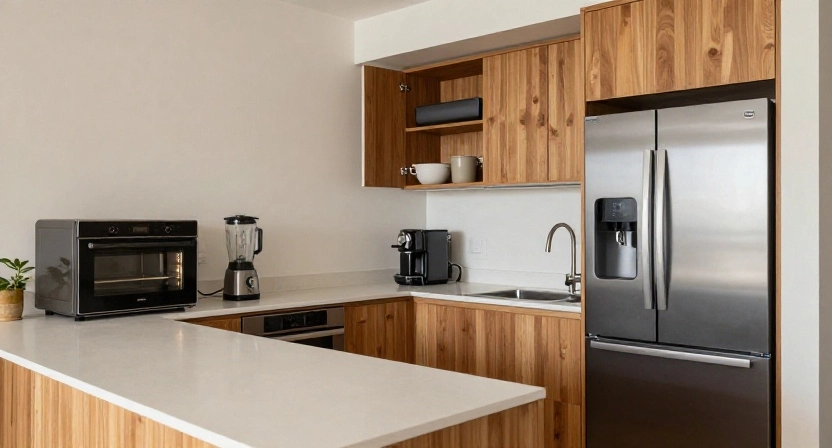 The current kitchen-appliance market shows significant overlap. An air fryer can carry out similar functions as a convection toaster oven. A high-performance blender can manage some tasks that would typically be assigned to a food processor. A multicooker may resemble a slow cooker.
That intersection isn't inherently negative, but it ought to affect purchasing choices.
A compact kitchen in an apartment might do better with a single multifunctional countertop oven instead of multiple appliances for toasting, air frying, and small baking. A family that frequently prepares smoothies but seldom cuts ingredients in large quantities might require a blender instead of a food processor.
The optimal arrangement isn't necessarily the one featuring the most devices. It is the one with the least amount of unnecessary repetition.
What to Check Before Buying a Kitchen Appliance
Identifying the top 10 kitchen appliances for your home involves considering more than just feature descriptions. Measurements should be prioritized for dishwashers, refrigerators, ranges, and countertop appliances. Measure the installation area along with doors, corridors, and any other spaces the appliance must go through for delivery.
For every device you are thoughtfully evaluating, verify:
Capacity: Adjust it to align with the typical number of people you usually prepare meals for instead of occasional peak demands.
Cleaning: Components that are removable and easily accessible typically enhance the likelihood of regular use.
Energy consumption: Evaluate EnergyGuide details when relevant and seek out ENERGY STAR certification in qualifying product categories.
Controls: Commonly used features ought to be accessible without having to navigate a convoluted interface.
Safety information: Adhere to the installation and operating guidelines provided by the manufacturer and verify CPSC recall data for associated products.
Repairability: The presence of spare parts and service may become more important as time passes than an additional cooking setting.
Current cooking practices: Purchase ingredients for meals you truly make, rather than for a hypothetical routine that demands a total shift in your eating habits.
An Improved Kitchen Begins With Simpler, Superior Options
Kitchen appliances are most beneficial when they ease the friction in tasks that occur frequently. A refrigerator, cooking area, and dishwasher create the essential base for numerous households, whereas smaller devices should justify their presence through consistent usage.This is the best approach to grasp any compilation of the top 10 kitchen devices. A slow cooker is ideal for scheduled, effortless meals but not needed for someone who rarely cooks in that manner. An air fryer can be extremely useful for small, crunchy servings but unnecessary alongside appliances that already perform the task effectively.
Select based on cooking practices, household dimensions, available area, upkeep, energy consumption, and safety rather than the quantity of promoted features. A well-equipped kitchen doesn’t require all appliances. It requires the correct ones.