1. AI Agents Are Moving Beyond Simple Chatbots
 Generative AI initially became familiar to many people as a system that could answer questions, summarize information, generate images, or write text. The next stage is increasingly focused on AI systems that can perform sequences of actions rather than simply produce a response.
These systems are often described as AI agents.
A conventional chatbot might explain how to organize a business trip. An AI agent could potentially work through several connected tasks, such as identifying suitable flights, comparing schedules, preparing an itinerary, checking calendar conflicts, and organizing relevant information for approval.
The important difference is action and orchestration.
Multiagent systems push the idea further by allowing specialized agents to cooperate. One agent might retrieve information, another analyze it, and another perform a particular workflow. Gartner included multiagent systems, domain-specific language models, physical AI, and AI security platforms among its strategic technology trends for 2026. But autonomy and dependability are not the same thing. Gartner's 2026 analysis also describes agentic AI as an area where expectations remain ahead of practical maturity in many situations. Many current deployments are still narrowly defined rather than completely autonomous.
For consumers, the most useful change may therefore be less dramatic than the idea of a completely independent digital employee. AI will increasingly appear inside software people already use, taking responsibility for small multistep processes while humans remain responsible for important decisions.
2. Specialized AI Could Matter More Than One Giant Model
The AI race has often been presented as a competition to build increasingly powerful general-purpose models. Another direction is becoming equally important: specialization. A general AI model needs broad knowledge because it may receive almost any type of request. A domain-specific model or agent can instead be designed around a narrower environment, such as software development, manufacturing, customer support, scientific research, or legal document analysis. Specialization can make systems easier to integrate with the tools and rules of a particular organization. It also changes what AI adoption looks like. Instead of every company attempting to build one enormous AI system that handles everything, organizations can combine smaller or specialized models with larger general-purpose systems. This distinction matters when evaluating Future Technology Trends to Watch This Year because the next stage of AI may be defined less by spectacular chatbot demonstrations and more by quiet integration into everyday software. An accountant, engineer, designer, warehouse manager, or customer-service employee might interact with different AI capabilities even though each is described broadly as "AI." The technology becomes more valuable when it understands the specific context in which a task occurs.3. Physical AI Is Giving Robots More Adaptable Skills
 Industrial robots have existed for decades, but traditional robots are exceptionally good at something modern AI is trying to move beyond: repetition.
A robot arm on an assembly line can perform the same carefully programmed movement thousands of times. Change the object, position, environment, or task, however, and substantial reprogramming may be required.
The goal of physical AI is to increase machine adaptability.
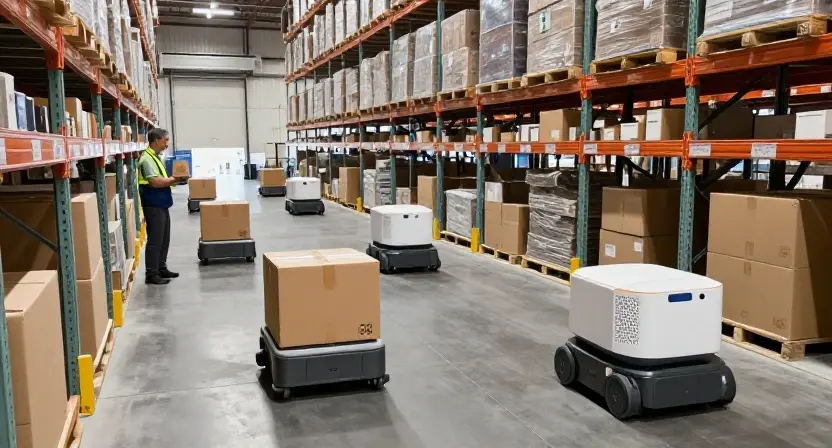
The concept combines AI models with robots and other physical systems so that machines can interpret their surroundings and determine appropriate actions. Potential applications extend from warehouses and manufacturing to logistics, agriculture, inspection, and eventually more capable service robots.
One important development is the use of simulation and demonstration-based learning. A robot can practice or learn behaviors in a virtual environment before those behaviors are transferred to physical hardware. To understand demonstrations and convert them into actions, more systems are being created.
In September 2026, for example, NVIDIA described work with Skild AI on a robotic foundation model designed to learn unfamiliar multistep tasks from video demonstrations. The examples show how robot training is advancing, but they are still part of a developing discipline and do not prove the arrival of general-purpose domestic robots.
That distinction is important. A machine built for a single fixed motion may be significantly less valuable than one that can adapt to new circumstances.
4. Autonomous Transportation Is Becoming a Real Local Service
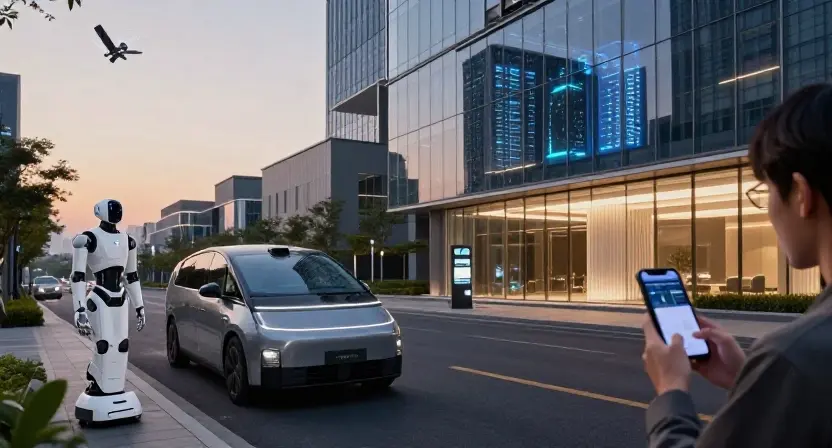
Self-driving vehicles have spent years in development, testing, and limited deployments. In 2026, the more significant story is that fully autonomous ride-hailing is becoming an actual transportation option in a growing number of American cities. Waymo reported in September that it had begun welcoming public riders in Denver, San Diego, and Tampa, bringing its fully autonomous trips to 14 cities at that point. Its current service information lists public operations across numerous U.S. markets. That does not mean fully autonomous vehicles are about to replace ordinary cars nationwide. Operating a robotaxi service within mapped and supported areas is different from producing a privately owned vehicle that can drive autonomously everywhere, through every weather condition and road environment. Still, the transition from prototype to paid transportation service is meaningful. Autonomous technology also extends beyond passenger vehicles. Similar perception, planning, and control technologies can support delivery systems, industrial vehicles, agricultural equipment, and other machines operating in structured environments. For U.S. consumers, the clearest signal to watch is geographic expansion. Autonomous transportation becomes more consequential when it changes from something people read about to something residents can actually use.5. Satellite Connectivity Is Filling Gaps Between Cellular Networks
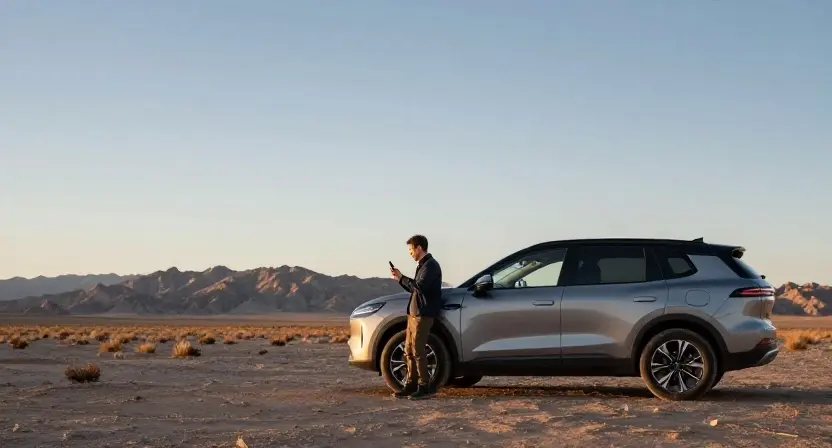 A smartphone traditionally depends on terrestrial infrastructure. If a user travels beyond cellular towers and Wi-Fi networks, that connection disappears.
Satellite-enabled phones are beginning to change the boundary.
Apple currently supports satellite features on compatible iPhones for functions including emergency communication, roadside assistance, location sharing, and messaging when cellular and Wi-Fi coverage are unavailable. Carrier-provided satellite capabilities are also developing, with some services using satellites to extend traditional mobile networks.
This is significant because satellite connectivity is becoming less separated from ordinary consumer technology.
Instead of carrying a specialized satellite phone, users may increasingly find limited satellite functionality built into a device they already own.
Current systems still have limitations. Satellite availability can depend on the device, carrier, country, plan, software, environment, and clear visibility of the sky. Satellite connections also should not automatically be treated as equivalent to high-speed terrestrial mobile networks.
The larger trend is nevertheless clear: the line between terrestrial cellular networks and satellite networks is becoming less rigid.
For travelers and people living or working in remote areas, that could gradually reduce one of the oldest limitations of mobile communication.
6. Quantum Computing Progress Is Already Changing Cybersecurity
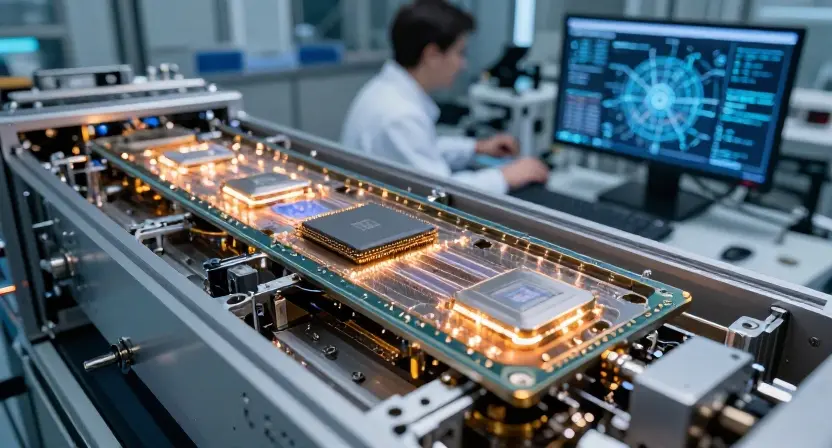 One of the easiest technologies to exaggerate is quantum computing.
Quantum computers are differentiated from traditional computers in information processing by the utilization of quantum-mechanical properties. They are not simply faster versions of ordinary PCs, and they will not make every conventional computing task dramatically faster.
The field is attempting to solve specific types of problems that can become extremely difficult for classical computers.
One of the largest obstacles is error.
Quantum information is extremely sensitive to disturbances, which makes reliable calculations difficult. Google announced that its Willow quantum processor showed enhanced quantum error correction with the use of more qubits, marking a significant research achievement for larger fault-tolerant systems.
Useful large-scale quantum computers are still a developing technology, but their potential impact is already influencing cybersecurity.
Some cryptographic systems protecting digital communications today could eventually become vulnerable to sufficiently capable quantum computers. That is why the National Institute of Standards and Technology finalized its first three principal post-quantum cryptography standards in 2024 and continues encouraging organizations to begin migrating toward quantum-resistant systems.
Ironically, one of quantum computing's most immediate practical effects may therefore arrive before the computers themselves: organizations changing how they encrypt information.
7. Cybersecurity Is Becoming More Proactive
Traditional cybersecurity generally involves detecting suspicious activities, mitigating known threats, addressing vulnerabilities, and responding after an incident happens.
Modern AI-driven systems are pushing security toward earlier detection and more automated responses.
This is partly necessary because attackers can also use automation and AI. Generative systems can increase the speed at which convincing phishing content, impersonation attempts, malicious code variations, and social-engineering material are produced.
Defenders are responding with systems capable of analyzing enormous streams of security data, identifying unusual patterns, prioritizing vulnerabilities, and helping security teams respond faster.
At the same time, AI creates new security problems.
An AI agent that has permission to access files, communicate with external systems, or perform actions represents a larger potential attack surface than a chatbot that only produces text. Organizations therefore need controls around permissions, identity, data access, monitoring, and the actions autonomous systems are allowed to perform.
Post-quantum migration adds another layer. NIST says organizations should identify where vulnerable cryptographic algorithms are currently used and plan how those systems will be replaced or updated.
Future cybersecurity is consequently not just about stronger antivirus software. It increasingly involves protecting identities, AI models, automated workflows, connected devices, data, and the cryptographic infrastructure underneath them.
8. AI Infrastructure Is Becoming an Energy and Engineering Challenge
Artificial intelligence may feel like software, but every AI response ultimately depends on physical infrastructure. Training and operating sophisticated models requires data centers filled with specialized computing hardware, networking equipment, cooling systems, and power infrastructure. As AI workloads grow, the engineering behind those facilities is becoming a technology story of its own. The U.S. Department of Energy noted in 2026 that large AI training centers can involve thousands of specialized chips operating in coordinated cycles, creating large and dynamic electrical loads. This creates pressure to improve efficiency at multiple levels. Chip designers can pursue better performance per watt. Data-center operators can improve cooling and power management. Software developers can use smaller models when a giant model is unnecessary. Workloads may also be distributed according to computing capacity, latency, energy availability, and cost. The result is an important shift in how technological progress should be measured. The future of AI cannot depend only on producing more computationally powerful models. Equally important will be making certain that those systems are cost-effective and energy-efficient.9. Ambient Computing Could Make Technology Less Visible
Some of the most influential technology may eventually be the technology users notice least. Smartphones currently act as the central control point for much of digital life. People open an app, enter information, tap controls, and wait for a result. AI assistants, wearable devices, connected homes, smart vehicles, sensors, and natural-language interfaces could gradually reduce the amount of explicit interaction required. Imagine a home where lighting, temperature, security, energy use, and appliances respond intelligently to context rather than requiring five separate apps. A vehicle could coordinate navigation, charging, entertainment, and scheduling. Wearable devices could provide information without requiring users to repeatedly pull out a phone. This broader idea is sometimes called ambient computing: digital systems becoming integrated into the surrounding environment. There are obvious tradeoffs. A system needs information to understand context. More personalized automation can therefore create questions about privacy, security, data collection, interoperability, and user control. The best ambient technology may not be the system that automates the greatest number of things. It may be the one that quietly removes unnecessary friction while leaving meaningful choices in human hands.What Separates a Real Technology Trend From Hype?
Technology predictions frequently fail because demonstrations are mistaken for widespread adoption.A lab prototype can demonstrate that something is technically achievable. A technology with commercial value must endure a significantly tougher evaluation.
It needs to be reliable enough, affordable enough, safe enough, scalable enough, and useful enough for people or businesses to keep using it.
A practical way to evaluate an emerging technology is to look for several signals:
- Real deployment: Is the technology being used outside controlled demonstrations?
- Repeatable usefulness: Does it solve a recurring problem rather than create an impressive demo?
- Infrastructure: Are compatible hardware, networks, standards, and services developing around it?
- Economics: Can the technology deliver enough value to justify its operating cost?
- Reliability: Can users trust it under normal conditions?
- Regulation and security: Can it operate within reasonable safety, privacy, and legal requirements?
The Bigger Technology Shift in 2026
The defining technology story of 2026 is not one invention replacing everything that came before it. It is convergence. AI is moving into software workflows and physical machines. Autonomous systems are leaving test environments and entering transportation networks. Satellite communications are connecting ordinary smartphones beyond cellular coverage. Quantum computing is pushing cybersecurity toward new cryptographic standards before large-scale quantum machines become practical. Some of these technologies will advance faster than others, and several remain constrained by cost, reliability, regulation, infrastructure, or technical limitations. That uncertainty is part of watching emerging technology responsibly. What matters most is the transition from impressive demonstrations to useful systems. Technologies that can make that transition reliably, securely, and economically are the ones most likely to shape everyday life long after the current wave of excitement has faded. Sources- Gartner: Top Strategic Technology Trends for 2026
- Gartner: 2026 Hype Cycle for Agentic AI
- NIST: Post-Quantum Cryptography
- NIST: First Three Finalized Post-Quantum Encryption Standards
- Google Quantum AI: Willow Quantum Chip
- Waymo: Public Autonomous Rides in Denver, San Diego, and Tampa
- Apple Support: Connecting to a Satellite With iPhone
- U.S. Department of Energy: Monitoring Large AI Data Centers
- NVIDIA: Physical AI and Robot Learning From Video