

What Makes an Internet Challenge Go Viral?
An internet challenge usually begins with a simple action that other people can easily understand and reproduce. It might involve a dance, a transformation, a joke, a creative task, a reaction, a guessing game, or a particular format for telling a story. The important part is not necessarily the originality of the first video. It is the repeatability of the idea. A challenge becomes easier to spread when a viewer can look at a video and immediately think, "I could do that." That creates a powerful cycle: Someone creates a format → viewers recognize it → people participate → their followers discover it → more variations appear → the challenge reaches new communities. Short-form video platforms are particularly well suited to this process because users can encounter a trend without deliberately searching for it. Pew Research Center's research on U.S. teens shows that TikTok is a major part of many teenagers' online lives. This widespread use helps explain how a recognizable challenge can reach large audiences and spread through social networks. That kind of highly connected environment gives participatory trends an enormous potential audience.The Psychology Behind the Participation
The appeal of a challenge is rarely just "this looks fun." Several social and psychological factors can operate at the same time.Participation feels better than passive viewing
Scrolling is mostly observational. A challenge changes the role of the viewer. Instead of watching someone else dance, cook, transform an outfit, answer questions, or attempt a task, the viewer can become part of the same conversation. That creates a sense of involvement. A person may also feel that participating gives them a temporary connection with people they have never met. Everyone is using the same basic format, but each person adds their own personality.People copy what already appears popular
Popularity itself can become a reason to participate. When someone sees thousands of videos using the same format, the trend feels established. There is less uncertainty about whether other people will understand the joke or recognize the reference. This is a form of social proof. People often use the behavior of others as a signal for what is interesting, acceptable, or worth their attention.Challenges offer a low-cost way to create content
Creating an entirely original video concept can require considerable effort. A challenge provides a ready-made framework. The creator only needs to add something personal. That might mean changing the setting, adding humor, showing a different skill, involving friends, or putting a personal twist on the original concept. The structure is already there, so the creative burden becomes smaller.Competition can make participation stronger
Some challenges contain an implicit contest. Who can do it better? Who can finish faster? Who can produce the funniest version? Who can create the most impressive transformation? Competition gives people another reason to participate and gives viewers a reason to compare multiple versions. Not every challenge is explicitly competitive, but many borrow some element of comparison.Why Short-Form Video Is So Powerful for Challenges
The format of modern social media matters as much as the challenge itself. A traditional article or long video requires a person to choose to consume it. A short video can appear unexpectedly while someone is already scrolling. That difference changes how trends spread. A viewer might see one challenge video, then another version from a different creator, and then a reaction to the original. After several exposures, the format becomes familiar. Once the viewer understands the pattern, participation becomes easier. There is also a feedback loop between creators and audiences. A creator can see that a particular format receives strong engagement and make another version. Other creators notice the response and make their own versions. The audience therefore does not simply consume the trend. It helps shape it. Pew Research Center's research on U.S. teens highlights the role of entertainment and social connection in platform use. These motivations help explain why short-form video trends can attract participants and spread across online communities. That combination is almost tailor-made for participatory trends.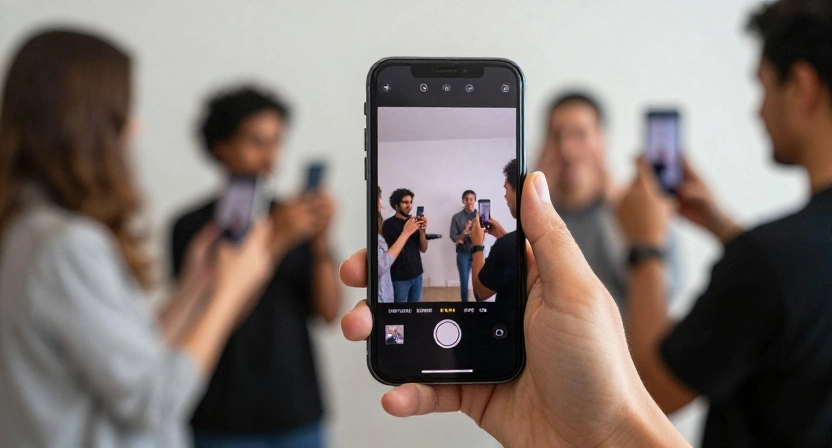
Not Every Viral Challenge Is Actually a "Challenge"
The term can be broader than it sounds. Some internet challenges clearly tell participants what to do. Others evolve into recognizable formats without an official set of rules. For example, a trend might begin with one person showing a before-and-after transformation. Other users reproduce the format with different subjects. Eventually, people may recognize the format even if they never see the original creator. This is one reason internet culture can be difficult to categorize. A challenge may overlap with:- Memes
- Social-media trends
- Dance trends
- Reaction formats
- Pranks
- Creative prompts
- Fitness or lifestyle experiments
- Food trends
- Costume or transformation trends
- Community games
Why Some Challenges Become Huge While Others Disappear
Millions of videos are uploaded online, but only a small fraction become widely recognized trends. Several characteristics can improve a challenge's chances of spreading.It is easy to understand
A viewer should not need a long explanation before knowing what the challenge involves. Simple concepts travel more easily than complicated ones.It is easy to reproduce
A challenge that requires expensive equipment, specialized knowledge, or unusual circumstances naturally has a smaller potential audience. The more accessible the activity, the larger the pool of possible participants.It creates a visible result
Before-and-after changes, reactions, surprising outcomes, humor, and visible transformations give viewers a reason to keep watching. The strongest formats often contain a built-in payoff.It leaves room for personality
A challenge that produces exactly the same result every time may become repetitive. A better format gives people enough structure to recognize the trend while leaving enough freedom to make their version different. That balance is important. The format needs to be familiar enough to spread but flexible enough to remain interesting.The Difference Between a Fun Challenge and a Dangerous One
Not every viral challenge deserves participation. The internet can make risky behavior look ordinary because viewers often see the successful attempts rather than the attempts that ended badly. A person may watch dozens of videos where nothing goes wrong and begin to underestimate the possibility of injury. That is particularly concerning when a trend involves dangerous stunts, harmful substances, reckless driving, extreme physical actions, or behavior designed to frighten or hurt another person. TikTok's current Community Guidelines explicitly prohibit content that shows or promotes dangerous activities and challenges that could cause physical harm. The platform specifically describes dangerous challenges as including risky dares, games, tricks, misuse of dangerous tools, and harmful substances. The lesson for viewers is straightforward: virality is not evidence of safety. A video receiving millions of views tells you that people watched it. It does not tell you that the activity is sensible.
Why Social Pressure Can Change the Way People Behave
One of the more complicated aspects of viral challenges is the pressure to participate. A person may see friends doing a trend and feel left out by refusing. Teenagers can be particularly sensitive to social expectations, although adults are hardly immune to them. Pew Research Center's research into teens and social media found that 31% of teens said social media makes them feel pressure to post popular content, while 31% said social media can make them feel excluded by friends. That does not mean every viral challenge creates harmful pressure. Many are simply entertaining ways to interact with friends. But the distinction matters when participation becomes less about enjoyment and more about proving that someone is willing to take a risk. A healthy challenge leaves room for someone to say no without embarrassment.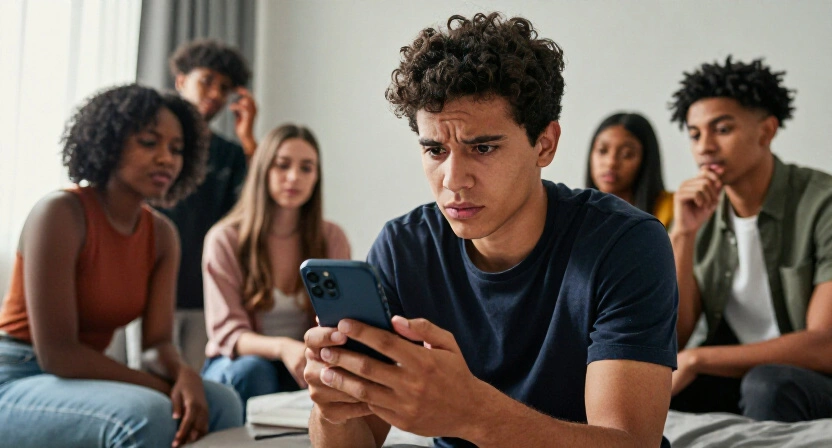
Viral Challenges Can Also Be Positive
It would be a mistake to treat every internet challenge as a problem. Some trends encourage creativity, generosity, learning, physical activity, or community participation. A challenge can give people a reason to:- Try a creative skill
- Learn something new
- Make a funny video with friends
- Experiment with photography or editing
- Share cultural traditions
- Support a charitable cause
- Participate in a community event
- Encourage others to complete a constructive goal
How Parents Can Talk About Viral Challenges Without Making Things Worse
For parents, simply saying "never do internet challenges" is unlikely to be a complete solution. Young people often encounter trends through friends, classmates, creators, and algorithmically recommended videos. Parents may not see the trend until their child already knows about it. A more useful approach is to ask questions. For example:- What are people actually doing in the challenge?
- What happens if something goes wrong?
- Would you do this if nobody could record it?
- Is the challenge funny because everyone is participating, or because someone could get hurt?
- Could the video embarrass you or someone else later?
- Does participating require sharing private information?
- Is someone pressuring you to do it?
A Simple Test Before Joining a Viral Challenge
Before participating in a challenge, consider five questions:- Is it physically safe? If the activity could cause injury, the fact that other people are doing it is not a safety guarantee.
- Could someone else be harmed or humiliated? A prank can stop being funny when another person becomes the unwilling target.
- Does it involve private information? Some trends encourage people to reveal locations, personal details, school information, or other information that can spread beyond the intended audience.
- Would you still do it without the camera? This is a useful way to separate genuine enjoyment from pressure to perform for an audience.
- Could you regret the video later? Internet content can be copied, reposted, downloaded, or viewed by people outside the original audience.