

What Do We Mean by Internet Culture?
Culture usually refers to shared practices, language, values, symbols, customs, and ways of interpreting the world. Apply that idea online, and internet culture becomes the collection of behaviors, references, communities, creative formats, and social expectations that emerge among people using digital networks. There is no single internet culture. A teenager browsing brief videos, a software engineer engaging in an open-source community, a sports enthusiast talking about a match, and a hobbyist sharing in a niche forum may inhabit quite distinct online spaces. Every community is capable of creating its own language and standards. However, these areas intersect. A phrase that starts in a small community can transition to a broader social network, evolve into a meme, show up in ads, infiltrate common dialogue, and ultimately be utilized by individuals unaware of its source. The scale makes this cultural exchange difficult to dismiss as a niche phenomenon. DataReportal projected that there would be 324 million internet users in the United States by the end of 2025, accounting for 93.1 percent of the population. It also estimated 254 million social-media user identities, while cautioning that these identities do not necessarily correspond to the same number of unique people. DataReportal – Global Digital Insights Internet culture is, therefore, not merely "what occurs on social media." It is an extensive assemblage of intermingling cultures generated through websites, platforms, games, messaging applications, forums, creator communities, comment areas, and various interconnected spaces.The Internet Transformed Individuals From Mere Observers Into Active Participants
One of the most important differences between traditional mass media and internet culture is participation. Throughout a significant portion of the 20th century, television networks, newspaper publishers, record labels, and film studios were pivotal in determining which cultural productions were presented to broad audiences in the United States. Television networks broadcast programs. Newspapers printed stories. Record companies distributed music. Movie studios released films. Audiences could respond, but their ability to distribute a response to millions of strangers was limited. The internet radically lowered that barrier. Someone can watch a video and immediately parody it. A screenshot can be given a new caption. Fans can analyze an episode together. Audiences can transform an unintended incident from a livestream into an ongoing gag. That means online culture is often iterative rather than simply consumed. People continually modify what other people have made. An effective method to consider the distinction is this:| Traditional mass-media pattern | Common internet-culture pattern |
| A relatively small number of producers | Millions of potential creators |
| Content delivered to an audience | Content circulated among participants |
| Feedback may arrive slowly | Reactions can appear immediately |
| Finished works are emphasized | Remixing and reinterpretation are common |
| Distribution controlled by publishers or broadcasters | Platforms and users both influence distribution |

Memes Are More Than Pictures With Captions
Few elements demonstrate this participatory system more effectively than memes. The term "meme" existed before the rise of the modern internet. It was introduced by Richard Dawkins in 1976 during a conversation about cultural transmission. The modern internet meme has evolved into a more precise concept: digital content that individuals share, replicate, modify, and reinterpret. Scholarly descriptions of internet memes highlight this pattern of common traits, replication, alteration, and involvement. Sage Journals That last part matters. A meme is often less like a single joke and more like a joke-making framework. Envision a visual template that initially conveys irritation. One person replaces the text to make it about college. Someone else makes it about office meetings. Another uses it for sports. The recognizable structure remains while the meaning changes. Understanding the joke can require knowing both the template and what has been changed. That makes memes a kind of cultural shorthand. A small image, phrase, GIF, audio clip, or video format can carry layers of meaning for people familiar with its history. The same process also clarifies why internet humor may seem confusing to outsiders. Without the necessary context, the punch line may barely exist.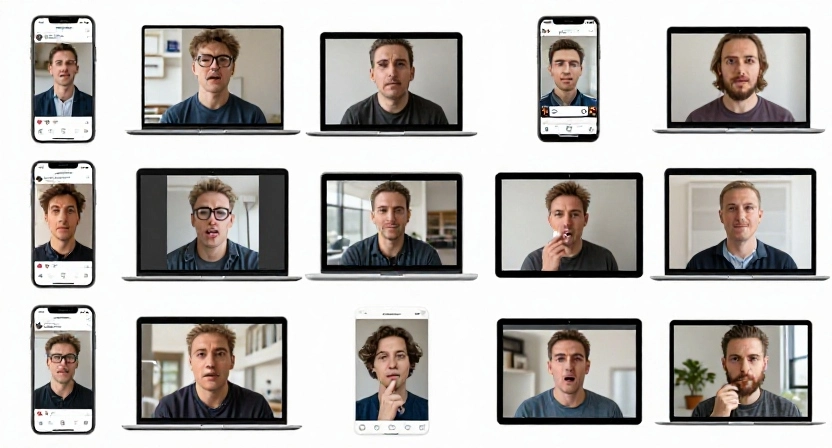
Online Communities Develop Their Own Languages
Internet language evolves unusually quickly because people can observe and copy one another almost instantly. Abbreviations, reaction images, combinations of emojis, intentional misspellings, catchphrases, and unconventional usages of common words may serve as indicators of belonging to a group. Even punctuation can carry meaning. A message that concludes with a period may seem entirely neutral in one context while sounding unexpectedly grave in another. Using all capital letters can imply yelling. Repeating a particular emoji can communicate something quite different from its literal pictorial meaning.Context is important since digital language isn't universal. A saying that appears normal on one platform can serve as a private joke in another context.
Internet slang also crosses into offline life. Individuals are progressively encountering online phrases in educational settings, professional environments, marketing, television, and everyday dialogue.
The influence also flows in the other direction: internet communities borrow from music, gaming, regional speech, movies, sports, and politics, then combine those influences in new ways.
Platforms Do Not Merely Host Culture
It is alluring to envision the internet as an impartial platform where users decide what gains popularity. Contemporary platforms complicate reality further. Their technical design affects behavior. A platform centered on brief videos promotes distinct creative practices compared to a discussion forum structured in lengthy threads. Character limits influence the way individuals compose texts. Recommendation systems affect exploration. Like buttons provide clear indicators of approval. Republishing technologies make content sharing easier. This creates a feedback loop: Individuals produce content → platforms evaluate responses → recommendation systems promote certain content more broadly → creators observe successful performance → subsequent content evolves. As a result, online culture is influenced in part by human ingenuity and in part by the systems that convey that ingenuity. This also helps explain why different platforms develop distinct personalities. The people matter, but so do the tools available to them. Pew's 2025 survey illustrates the diversity of these audiences. Among adults in the U.S., 84 percent indicated they use YouTube, 71 percent use Facebook, 50 percent use Instagram, and 37 percent use TikTok. There were significant variations in usage based on age. Pew Research Center A single digital town square does not exist since not all Americans share the same online environments.Virality Altered the Definition of Fame
Conventional celebrity often needed entry to established sectors. Internet popularity can start with a bedroom video, live stream, post, joke, dance, review, or an entirely unplanned moment. This has led to creators with audiences comparable to those of conventional entertainment personalities. Significantly, it has generated a new form of notoriety: micro-celebrity. A person does not need to be recognizable to the entire country. Someone can be extremely influential within a specific community while remaining unknown outside it. The internet therefore produces many layers of visibility. A creator could be well-known among individuals who are passionate about mechanical keyboards, cooking at home, fashion, gaming, literature, personal tech, or a specific sport. Digital communities can maintain very niche audiences that conventional mass media may have viewed as too minor to reach individually.Virality represents the most intense form of this system.
Something suddenly escapes its original audience and spreads rapidly between communities. Yet virality is unpredictable. Millions of posts compete for attention, and even creators who understand a platform cannot reliably manufacture cultural importance.
Internet Culture Runs on Belonging
Much of online behavior makes more sense when viewed through community rather than technology. People gather around shared interests, experiences, professions, hobbies, identities, entertainment, problems, and goals. These groups establish clear norms: what is considered a valuable contribution, which jokes are permissible, how newcomers are welcomed, and what actions receive criticism. That can create genuine social value. An individual with a unique hobby no longer has to wish for someone close to enjoy it as well. Fans thousands of miles apart can talk about the same show. Individuals acquiring a skill can share insights with those who are more seasoned. Internet communities can therefore create what might be called cultural neighborhoods without physical proximity. But belonging has another side. Strong communities can become insular. Insider language can exclude newcomers. Groups may reward conformity, intensify hostility toward outsiders, or reinforce inaccurate information. Community itself is neither automatically healthy nor harmful. Its impacts rely on its standards, motivations, guidance, restraint, and participants.
Irony Makes Internet Communication Powerful and Confusing
Internet culture frequently operates through irony. People deliberately exaggerate. They pretend to believe ridiculous things. They recycle outdated aesthetics because being outdated is the joke. Because polished photographs would be less humorous, they specifically choose uncomfortable ones. This leads to a persistent issue: understanding intention becomes challenging. Is the person serious? Is the post satire? Are they making fun of or supporting an opinion? Does a bizarre phrase have a hidden history? Longtime members of a community may recognize the signals immediately. Outsiders may not. Multiple layers of irony can generate even more ambiguity. A joke can begin as ridicule, gain popularity among those who appreciate it genuinely, and ultimately blur the lines between satire and true excitement. As a result, internet culture relies significantly on contextual understanding. Understanding the exact meaning of the words is occasionally merely the starting point.The Attention Economy Influences What We See
Online culture is also shaped by competition for attention. Every user has limited time. Platforms, creators, publishers, advertisers, entertainers, and countless other participants compete for some portion of it. Content that provokes a quick reaction can have an advantage in such an environment. Laughter, indignation, astonishment, originality, dread, adorability, disagreement, and deep connection can all draw people's attention away from scrolling. This does not imply that considerate content cannot thrive. This indicates that visibility and quality are measured differently. The distinction is crucial. A widely shared claim is not automatically true. A video that is watched a lot isn't automatically significant. A popular opinion does not necessarily represent the population. Online visibility tells us that something received attention. The reason it garnered attention is a different matter.
Internet Culture Can Collapse Context
One unusual feature of online communication is what researchers often describe as context collapse: audiences that would normally remain separate can suddenly encounter the same message. Imagine making a joke intended for ten friends. In person, those friends understand your character and the context surrounding the joke. Online, the same comment might be screenshotted and shown to thousands of strangers. They face the words devoid of the original context, emotion, timing, or history. The content stays, but a significant portion of its context fades away. This clarifies why online conflicts can intensify quickly. Participants might be reacting not just to the original intent but also to the way the message seems when removed from its intended audience. The opposite happens too. Public discussions are progressively shifting into private online spaces. Pew indicated in October 2026 that, among U.S. adults questioned about their online news participation from the prior week, discussing or sharing news privately occurred more frequently than public posting, sharing, or commenting on news. Pew Research Center What is culturally important online is not always happening in public view.The Most Valuable and Detrimental Aspects Frequently Arise from Identical Characteristics.
Internet culture contains a recurring contradiction: many of its strengths and weaknesses grow from identical mechanisms. Simple involvement fosters creativity, yet it also facilitates the production of misinformation. Anonymity can allow people to discuss sensitive subjects without exposing themselves, but it can also reduce accountability. Communities offer a sense of belonging, but some turn into echo chambers. Swift dissemination allows valuable information to circulate rapidly, whereas misleading assertions can take advantage of the same system. Memes can communicate complicated feelings with remarkable efficiency, but simplified formats can strip complicated subjects of necessary context. Even algorithms have a double effect. Personalized recommendations can introduce someone to music, creators, information, or communities they genuinely enjoy. The same personalization can repeatedly expose a person to a narrow range of material. The culture cannot be easily separated into "positive internet" and "negative internet." The outcomes significantly rely on how individuals, groups, corporations, and organizations utilize systems designed for vast speed and scale.How to Navigate Internet Culture More Intentionally
Understanding online culture is useful because participation is not entirely passive. A few habits can make digital environments easier to interpret.- Separate popularity from credibility. Viral content requires the same level of verification as lesser-known content, and at times even more.
- Look for missing context. Before reacting to a screenshot or short clip, consider what happened before and after it.
- Recognize community-specific norms. Humor and language do not translate seamlessly across online communities.
- Notice recommendation loops. Viewing something multiple times doesn’t automatically indicate that everyone is discussing it.
- Trace claims toward their original source. Reposts and summaries can gradually change what the source actually said.
- Remember that visible users are not everyone. People who post constantly can appear more representative than quieter participants.