
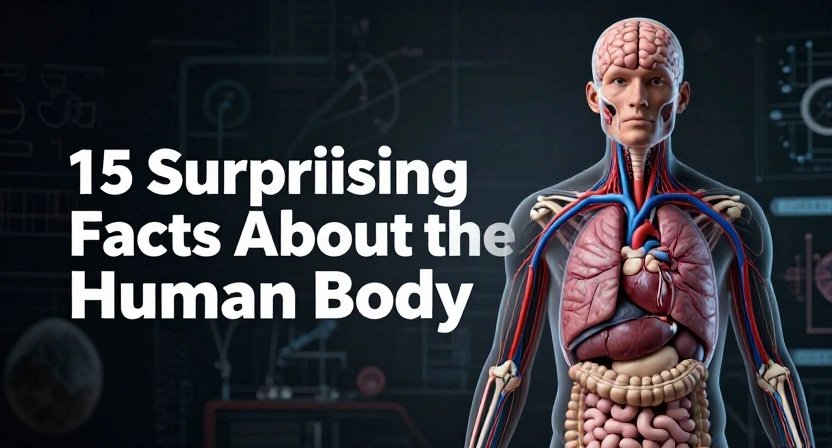
1. Your Skin Is an Organ, and It Does Much More Than Cover You
Skin may look like simple packaging for everything underneath it, but it is actually the body's largest organ. Its job is remarkably complicated. Skin helps keep water inside the body, provides a physical barrier against harmful microorganisms and environmental hazards, contributes to temperature regulation, allows us to detect touch and temperature, and plays a role in vitamin D production. The outer epidermis also continually replaces cells as older ones are shed. Under that visible surface is an active network of blood vessels, nerves, sweat glands, oil glands, hair follicles, connective tissue, and immune cells. That means a minor scrape is not simply damage to a wrapper. It disrupts part of an active protective system, which is why the body quickly begins clotting, inflammation, tissue repair, and remodeling.2. Bones Are Living Tissue, Not a Permanent Frame
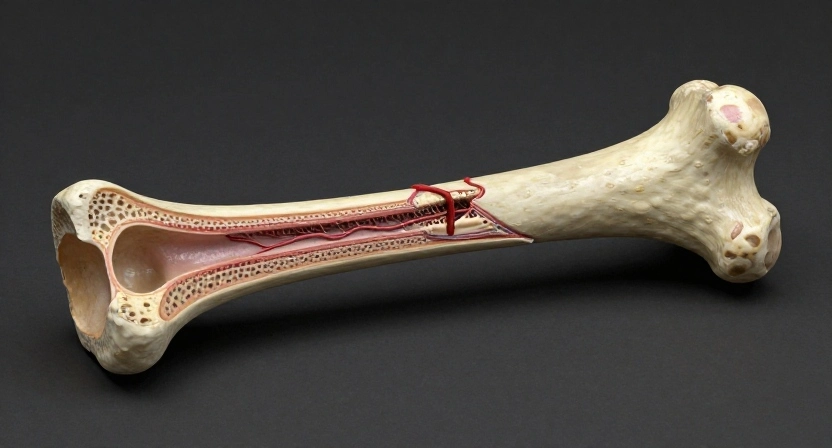 A skeleton in a museum gives the impression that bone is dry, fixed, and almost rock-like. Inside a living person, the situation is very different.
Bone is biologically active tissue. It contains cells and blood vessels, and it participates in ongoing maintenance and repair. Its combination of collagen and mineral gives it an unusual balance of flexibility and strength.
Bones also function as mineral reservoirs, particularly for calcium and phosphorus. They protect organs, provide leverage for movement, and house marrow that participates in blood-cell production.
This constant biological activity explains something familiar: a broken bone can heal. Your skeleton is not merely the structure you were given at adulthood. It remains part of the body's living maintenance system.
3. Your Bone Marrow Is a Blood-Cell Factory
One of the body's most important production sites is hidden inside its bones. Bone marrow contains cells involved in producing the blood cells that circulate throughout the body. That includes red blood cells, which transport oxygen, as well as several types of white blood cells involved in immune defense. This makes bone far more than structural material. A structure associated with standing, walking, and protecting organs also contains tissue essential to the circulatory and immune systems. It is a useful reminder that the body's systems are rarely isolated. The skeletal system, circulatory system, and immune system are connected in ways that are easy to miss when they are presented as separate chapters in a biology textbook.4. Adults Have Fewer Bones Than Babies
An adult human skeleton is typically described as having 206 bones, but humans begin life with more separate skeletal elements. As a child grows, some of these structures gradually fuse. The skull provides an obvious example. A newborn's skull contains flexible spaces and separate bones that accommodate birth and allow room for rapid brain growth. Over time, the skull becomes more rigidly joined. Fusion also occurs elsewhere in the skeleton. So growing up does not simply mean making every bone larger. It involves changing how individual skeletal components are connected. The adult skeleton is partly the result of many structures becoming consolidated during development. The exact number of bones can also vary between individuals because human anatomy naturally has some variation.5. Your Liver Can Restore Lost Mass
Humans cannot regrow an amputated arm or leg, but one internal organ has an exceptional capacity to recover: the liver. When part of the liver is damaged or surgically removed, the remaining tissue can grow until the organ returns toward the size required by the body. This is often called liver regeneration, although it is not the same as growing an entirely new liver from a tiny fragment. Existing liver cells proliferate, and the remaining tissue expands.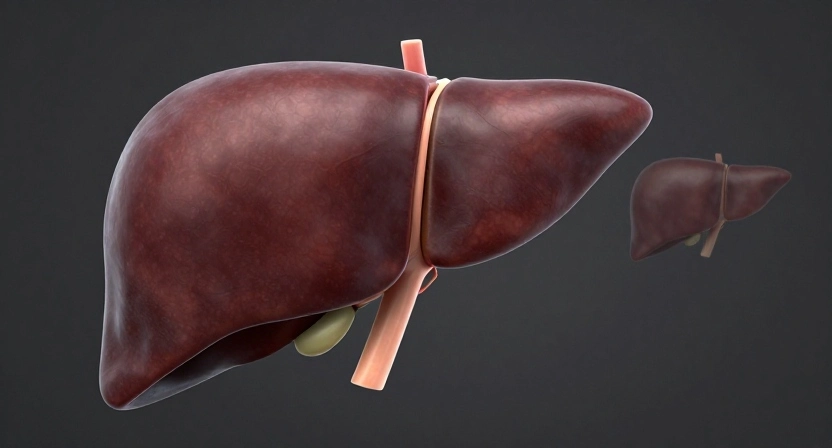 This ability is one reason living-donor liver transplantation is biologically possible.
But regeneration should not be confused with invulnerability. Chronic disease, toxins, severe injury, and repeated damage can overwhelm the liver's capacity for repair.
Its real achievement is more subtle: an adult human organ can sense that functional mass has been lost and coordinate a remarkable growth response.
6. Your Brain Tissue Does Not Feel Pain the Way Your Skin Does
This sounds contradictory because headaches can be intensely painful. The distinction is that brain tissue itself lacks the pain receptors responsible for detecting injury in many other tissues, while surrounding structures can generate headache pain (Johns Hopkins Medicine). Head pain can instead arise from pain-sensitive structures around the brain and head, including blood vessels, nerves, muscles, and membranes. That distinction has an extraordinary consequence in medicine. Certain neurosurgical procedures can be performed while a patient is awake after appropriate anesthesia is used for pain-sensitive tissues. Keeping the patient responsive can help surgeons monitor functions such as speech or movement while working near important brain regions. So when your head hurts, the sensation is real, but the tissue doing the thinking is not necessarily the tissue generating the pain signal.7. Your Two Lungs Are Not Mirror Images
From the outside, the body looks roughly symmetrical. Internally, organs have to negotiate for limited space. The right lung normally has three lobes, while the left has two. The left lung also accommodates the heart, which sits partly toward the left side of the chest. This difference is a good example of how anatomy is shaped by neighboring structures. Human organs are not individual components placed into perfectly separate compartments. Their sizes, shapes, and positions reflect the physical constraints created by everything around them. The lungs still work as a coordinated pair, but they are not identical copies.8. The Old "Tongue Map" Is Wrong
Many people encountered a diagram in school showing sweet at the tip of the tongue, bitter at the back, and other tastes assigned to separate zones. Human taste does not work that way. Taste cells responsive to different basic taste qualities are distributed throughout the tongue rather than being confined to exclusive geographic regions. The recognized basic qualities include sweet, sour, salty, bitter, and umami. Different areas can show variations in sensitivity, but there are no strict borders where one taste suddenly stops and another begins. It is a useful example of how a simple classroom diagram can survive in popular culture long after the underlying science has become better understood.9. Much of "Taste" Is Actually a Team Effort
Close your nose while eating something flavorful and the experience may suddenly seem much flatter.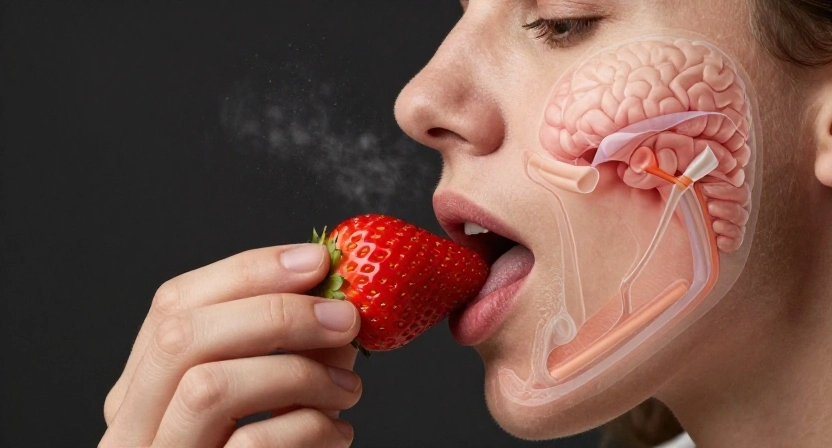 That is because what we casually call taste is actually flavor, a combined perception produced by several sensory systems. Taste receptors detect basic qualities such as sweetness or saltiness, while aromas detected through smell contribute enormous amounts of additional information. Temperature, texture, and chemical sensations also matter.
Menthol's cool sensation and the burn of chili peppers, for example, involve sensory pathways beyond ordinary taste.
This helps explain why food can seem bland when nasal congestion interferes with smell. Your tongue may still detect sugar, salt, acid, and other basic tastes, but a major part of the sensory picture is missing.
10. Your Smell and Taste Receptor Cells Can Be Replaced
Nerve-related sensory systems might sound like permanent hardware, but smell and taste have an unusual feature. Receptor cells associated with these chemical senses are continually replaced, and they can also be replaced following certain types of damage. The National Institute on Deafness and Other Communication Disorders (NIDCD) explains that smell and taste receptor cells are continually replaced throughout life and can also be replaced rapidly after certain types of injury (NIDCD Taste and Smell Program). That does not mean every case of smell or taste loss will automatically resolve. The cause, severity of damage, age, and other factors can influence recovery. Still, the underlying biology is striking. Some of the cells responsible for interpreting the chemical world around you belong to systems designed with an ongoing capacity for renewal.11. Bacteria Probably Do Not Outnumber Your Cells 10 to 1
For years, one of the most repeated human-body facts was that bacterial cells outnumber human cells by roughly 10 to 1.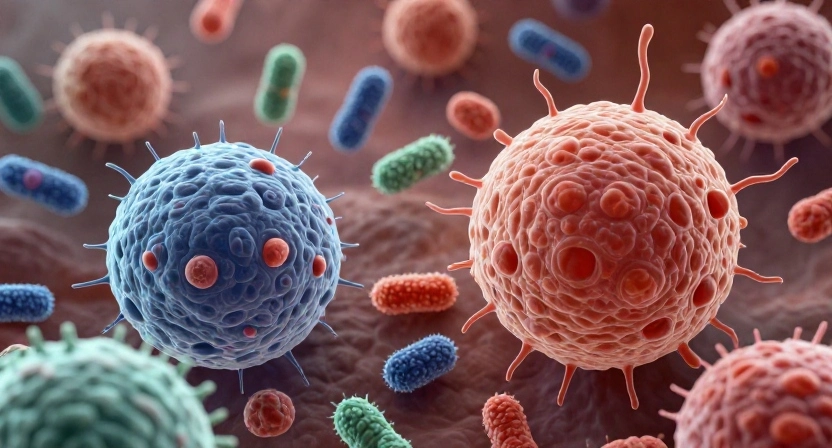 Modern estimates have dramatically revised that picture.
One influential analysis estimated roughly 38 trillion bacterial cells and 30 trillion human cells in a reference adult male. Those figures are estimates and vary between people, but they place the relationship much closer to 1 to 1 than 10 to 1.
The broader lesson is more interesting than the exact number. The human body supports enormous microbial communities, particularly in the digestive tract, and those microorganisms interact with human biology.
It is also a reminder that memorable scientific claims deserve occasional rechecking. Better measurements can overturn even facts repeated for decades.