

1. Why Do Jeans Have That Tiny Extra Pocket?
The tiny pocket tucked inside the front pocket of many pairs of jeans looks almost useless today. Its origins make much more sense when you consider what people carried in the late 19th century. It was designed as a watch pocket, providing a protected place for a pocket watch. Watches eventually moved from pockets to wrists, and later to phones and smartwatches, but the little pocket survived. Today, people may use it for coins, keys, guitar picks, or other small objects. Its continued existence is a good example of how clothing can preserve design features long after their original purpose becomes uncommon.2. Why Are Keyboard Letters Not in Alphabetical Order?
The familiar QWERTY keyboard looks strangely disorganized if you have never considered its history. Modern computer keyboards inherited their basic layout from mechanical typewriters. Early typewriter designs had physical mechanisms connecting keys to type bars, and keyboard layouts evolved alongside efforts to make typing practical and reliable. The exact history of QWERTY is more complicated than the popular story that it was simply created to slow typists down. What matters today is that the arrangement became deeply established. Once millions of people learned QWERTY and businesses adopted compatible equipment, changing the standard became difficult. Modern computers no longer have type bars that can collide, but familiarity keeps the old layout dominant.3. Why Do Airplane Windows Have a Tiny Hole?
Look closely at a passenger airplane window, and you may notice a small hole in one of the panes. It is commonly called a bleed hole. Passenger windows are made from multiple layers rather than a single sheet. During flight, the aircraft cabin is pressurized while the outside air pressure is much lower. The small opening helps manage pressure between window layers so that the appropriate pane handles the main pressure difference. It can also help reduce moisture buildup between layers. So the hole that might initially look like a defect is actually part of the window system's engineering.
4. Why Do Pen Caps Sometimes Have Holes?
Many capped pens have an opening at the top of the cap. It may look decorative, but on some widely sold pens, it serves a safety-related purpose. A cap can become a choking hazard if accidentally swallowed or inhaled. A hole may allow some airflow if a cap becomes lodged in a person's airway, potentially reducing the severity of an obstruction while emergency help is sought. Not every pen cap uses the same design, so a hole should never be interpreted as making a swallowed cap safe. It is simply an example of a small product feature that can have a much more serious purpose than its appearance suggests.5. Why Is There a Hole in a Pasta Spoon?
That hole in the center of some spaghetti servers does more than let water drain away. Depending on the utensil's design, it can also provide a rough way to portion dry spaghetti. A bundle that fits through the opening may approximate a serving amount. There is no universal standard, however. Hole sizes differ among manufacturers, so it should not be treated as a precise measuring tool. Its more obvious function remains useful too: when pasta is lifted from boiling water, liquid can drain through the opening instead of collecting in the spoon.6. Why Do Some Padlocks Have a Tiny Hole on the Bottom?
Turn over certain outdoor padlocks, and you may find a tiny opening near the keyway. This can function as a drainage hole. Padlocks used outside are exposed to rain and moisture, and trapped water could contribute to corrosion or interfere with internal components. Depending on the lock design, an opening may also provide access for appropriate lubrication. Not every padlock includes one because construction methods vary. When it is present, though, the little hole is another example of an easily overlooked feature created to help a product survive real-world conditions.7. Why Do Coins Have Ridges Around Their Edges?
The ridged edges on coins such as U.S. dimes and quarters have historical roots. When coins were made from precious metals, removing a small amount of metal from the edge could reduce a coin's value while leaving it superficially recognizable. Milled or reeded edges made that kind of tampering easier to notice. Modern circulating U.S. coins are not simply pieces of precious metal whose face value depends on their metal content, but the edge designs remain. The ridges also make denominations easier to distinguish by touch. A quarter feels different from a nickel even when you cannot see either coin clearly.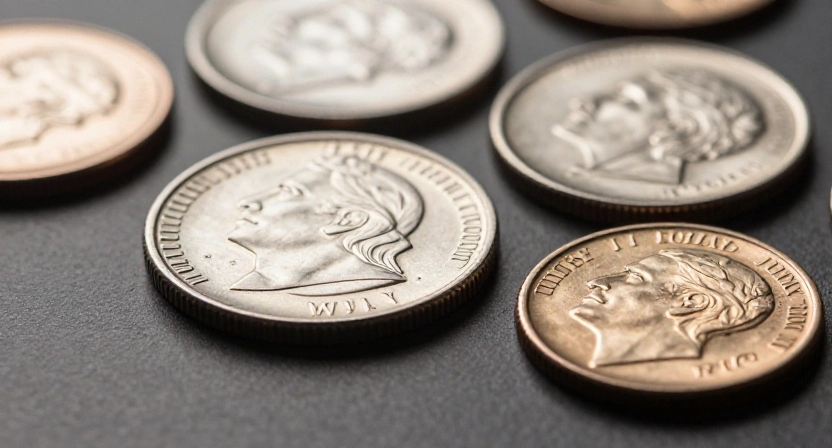
8. Why Is There an Arrow Beside the Gas-Pump Symbol?
On many vehicles, the dashboard fuel gauge includes a tiny arrow or triangle beside the gas-pump icon. It tells you which side of the vehicle has the fuel-filler door. An arrow pointing left means the filler is on the driver's left side; an arrow pointing right indicates the opposite side. This is particularly useful in an unfamiliar vehicle, such as a rental car. Instead of arriving at a gas pump and realizing the filler door is on the other side, one quick glance at the dashboard can tell you where to position the car. It is one of the most useful symbols many drivers overlook.9. Why Do Tape Measures Have a Loose Metal Hook?
The metal hook at the end of a tape measure may wiggle slightly. That movement can look like wear or poor construction, but on a properly designed tape, it is intentional. Measurements are sometimes taken by hooking the tape over an outside edge and sometimes by pushing its end against an inside surface. The hook can move by approximately its own thickness, allowing the tape to compensate for the metal hook depending on how the measurement is taken. That small amount of movement helps both methods begin from the correct reference point. So before tightening a loose-looking tape-measure hook, remember that the movement may be exactly what allows it to measure accurately.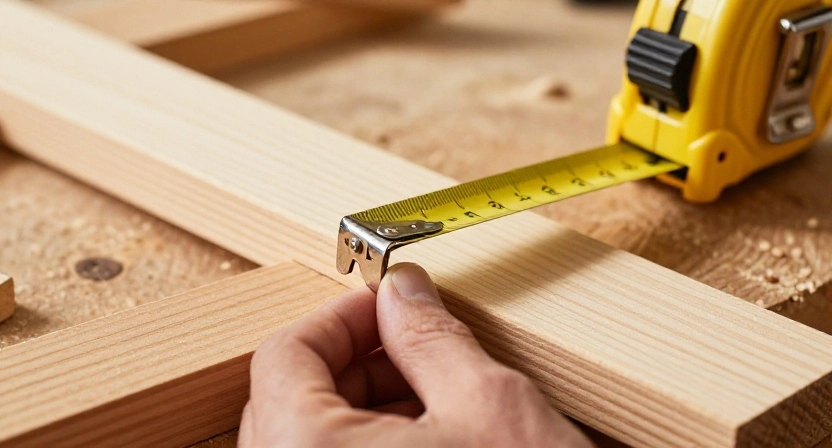
10. Why Do Bobby Pins Have One Wavy Side?
A bobby pin usually has one straight side and one wavy side. The waves are not merely decoration. They help the pin grip hair more effectively. For many hairstyles, the wavy side works best facing toward the scalp, where its shape can catch and hold hair while the smoother side remains outward. Many people instinctively wear them the opposite way because the smooth surface looks like the more obvious "bottom." It is a tiny example of how an object's intended orientation is not always visually obvious.11. Why Are Manhole Covers Often Round?
Round manhole covers are common for several practical reasons. One especially useful property is that a circular cover cannot fall through a circular opening of the same size. A square cover, by comparison, can potentially fit diagonally through a sufficiently sized square opening. Round covers are also convenient to move because heavy ones can be rolled on their edges. Their shape does not require workers to align corners when replacing them. Not every utility cover is circular, but where large underground access openings need heavy removable covers, the geometry of a circle offers several advantages at once.12. Why Are Traffic Lights Red, Yellow, and Green?
Traffic signals use colors that are now so familiar that their meaning feels instinctive: red means stop, yellow warns of a transition, and green permits movement. These conventions developed partly from earlier signaling systems, including railroad signals, and eventually became standardized for road traffic. Color is useful because drivers can recognize a signal quickly from a distance. But traffic lights do not depend solely on color. The consistent position and sequence of lights also provide important cues, particularly for people who have difficulty distinguishing certain colors. The familiar three-color system works because standardization lets millions of road users interpret the same visual language almost instantly.13. Why Do Elevators Have Mirrors?
Mirrors inside elevators can serve more than one purpose. They make a confined space feel visually larger, which may make the ride more comfortable for some passengers. They can also help people see what is happening around them without turning around. Accessibility is another practical consideration. A wheelchair user entering an elevator may have limited room to turn. A mirror can help someone see behind them while backing out. Of course, mirrors are also convenient for checking your appearance. But what seems like simple decoration can contribute to the usability of a small public space.14. Why Are There Gaps Between Bathroom Stall Doors?
Large gaps around public restroom stall doors are especially noticeable in the United States, and there is no single explanation that applies to every restroom. Cost and installation simplicity are chment point for extra gear. A strap or cord can be passed through the openings to secure lightweight items to the outside of a bag. The feature has roots in outdoor-oriented backpack design, where external attachment points are useful for equipment that does not fit conveniently inside. On modern lifestyle backpacks, the patch may be as much a visual reference to rugged outdoor gear as a frequently used feature. Still, it is functional when properly constructed.17. Why Do Wine Bottles Often Have an Indentation on the Bottom?
The indentation on the bottom of many wine bottles is known as a punt. Its exact purpose has varied across bottle-making traditions and designs. Historically, it could help accommodate manufacturing techniques and improve stability in hand-produced bottles. On some bottles today, a punt can contribute to structural design and provide a convenient grip when handling or serving. What it does not reliably tell ypart of the story. Standardized partitions that do not extend completely from floor to ceiling can be easier to manufacture, install, clean, and replace. Floor clearance also makes it easier to wash the restroom and spot whether a stall is occupied or needs attention. Privacy expectations vary considerably between countries, which helps explain why American restroom partitions can feel unusually open to visitors accustomed to more enclosed stalls. In other words, the gaps are generally a compromise among cost, maintenance, standardized construction, monitoring, and privacy, not a mysterious architectural requirement.15. Why Do Sneakers Have Extra Holes Near the Top?
Some athletic shoes include an additional pair of eyelets near the ankle that many people never use. They can be used for a lacing method often called a heel lock or runner's loop. Instead of simply threading the laces upward as usual, the extra eyelets help create loops that can hold the heel more securely. For some runners or walkers, this can reduce unwanted heel movement inside the shoe. It will not fix footwear that is fundamentally the wrong size or shape, but those seemingly unnecessary holes can provide another way to adjust fit without tightening every section of the laces equally.16. Why Do Some Backpacks Have a Diamond-Shaped Patch?
The small diamond-shaped patch with two narrow slots seen on some backpacks is often called a lash tab. Its purpose is to provide an attaou is whether the wine is good. A deep punt can make a bottle look substantial or premium, but bottle shape alone is not a dependable measure of what is inside. Packaging traditions often survive even when their original manufacturing reasons have changed.18. Why Do Some Computer Keyboards Have Bumps on F and J?
Run your fingers across a standard keyboard, and you will often feel small raised marks on the F and J keys. They are tactile reference points. In touch typing, the index fingers rest on F and J as part of the home-row position. The bumps allow a typist to locate that position by feel rather than looking down at the keyboard. From those two reference points, the other fingers can be positioned correctly. It is an elegantly simple piece of interface design. Instead of adding a light, screen notification, or mechanical guide, manufacturers can provide orientation with two tiny raised marks.19. Why Do Escalator Steps Have Grooves?
Escalator steps are covered with long parallel grooves, creating the familiar ribbed surface. Those grooves are part of the system that allows the moving steps to interact closely with the comb-like plates at the entrances and exits. The teeth of the comb plate fit into the grooves as each step disappears beneath the floor. The design helps create a transition between moving and stationary surfaces while reducing the space where objects might otherwise be carried into the mechanism. Escalators still require caution. Loose clothing, footwear, and other objects should be kept away from moving edges. The grooves are an engineered component, not a guarantee against accidents.20. Why Do Many Microwave Doors Have a Black Mesh?
A microwave oven would be inconvenient if you could not see your food, but simply installing an ordinary transparent window would create another engineering challenge. That dark perforated screen built into the door helps solve it. Microwave ovens use electromagnetic energy at wavelengths much larger than the tiny openings in the conductive mesh. The screen therefore helps contain microwave energy inside the oven while the holes remain large enough for visible light to pass through. Your eyes can see the food through thousands of small openings, while the oven enclosure is designed to keep the microwave energy where it belongs. It is a clever example of engineering hidden directly in plain sight.