1. White Sands National Park, New Mexico
Few American landscapes create a stronger sense of visual disorientation than White Sands. Located in southern New Mexico's Tularosa Basin, the park is covered by wave-like dunes of brilliant white gypsum. The unusual part is not simply the color. Gypsum is common as a mineral, but it rarely occurs naturally as an enormous field of sand because gypsum dissolves relatively easily in water. At White Sands, a combination of ancient geological deposits, water, evaporation, erosion, and wind created conditions that allowed gypsum crystals to accumulate and become sand-sized particles. The result is the world's largest gypsum dunefield, covering roughly 275 square miles. The park protects a major portion of it. Walk across the dunes, and the experience feels less like crossing an ordinary desert and more like walking through a frozen ocean. There are no familiar tan or reddish desert colors dominating the scene. The dunes continually shift as wind moves the gypsum grains. The landscape is also more biologically active than it appears. Plants and animals have adapted to an environment that looks almost completely barren at first glance. That contrast is one reason White Sands is more than a photogenic destination. It is an unusual example of how life can adapt to a highly specialized environment. For visitors, sunrise, sunset, and periods of softer light can dramatically change the appearance of the dunes. But even in ordinary daylight, the sheer whiteness makes White Sands one of the easiest places in the country to understand why people describe a landscape as "otherworldly."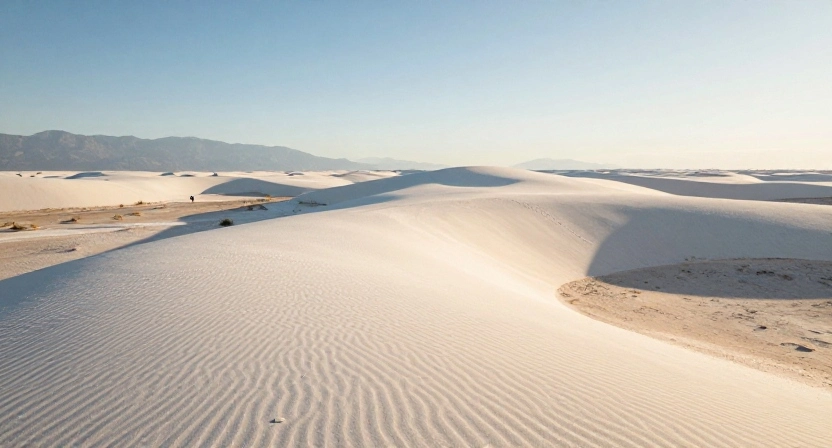
2. Bisti/De-Na-Zin Wilderness, New Mexico
If White Sands resembles another planet, Bisti/De-Na-Zin can look like the surface of an alien desert after millions of years of erosion. This remote Bisti/De-Na-Zin Wilderness in northwestern New Mexico contains badlands, sandstone formations, hoodoos, pinnacles, spires, and strangely shaped rocks. The landscape was created from layers of sandstone, shale, mudstone, coal, and siltstone that have been exposed and sculpted by natural weathering. What makes Bisti particularly unusual is the lack of a single dominant landmark. Instead, the landscape feels like a collection of geological sculptures scattered across a broad, rugged terrain. Some formations have narrow bases supporting wider caps. Others resemble towers, mushrooms, or irregular stone figures. Their shapes are not the result of human construction. Differences in rock hardness allow erosion to remove softer material more quickly while more resistant sections remain standing. The wilderness also has an important scientific dimension. Fossils and petrified wood occur in the sedimentary formations, providing evidence of ancient environments that existed long before today's desert landscape. This is one destination where preparation matters more than it does at a highly developed national park. Routes can be informal, services are limited, and connectivity may be minimal. After rain, some roads and clay-rich surfaces can become difficult or impassable. Visitors should therefore treat Bisti/De-Na-Zin as a genuine wilderness experience rather than a roadside attraction and check current conditions before traveling.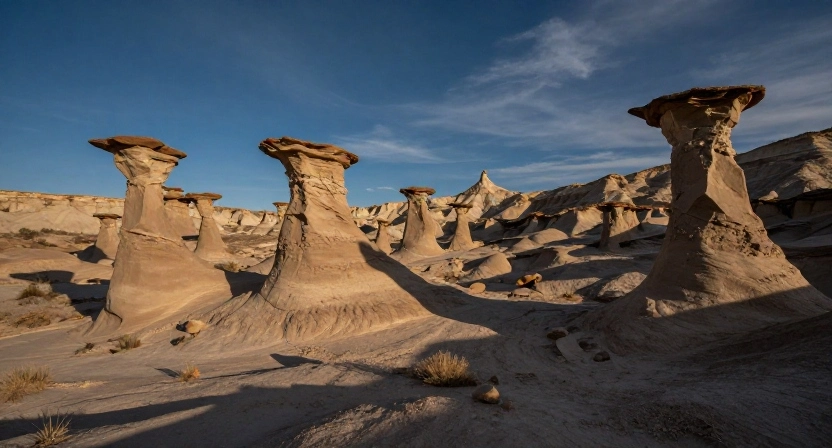
3. Badlands National Park, South Dakota
South Dakota's Badlands can seem almost incompatible with the surrounding Great Plains. Instead of broad, gently rolling grasslands, visitors encounter sharp ridges, pinnacles, buttes, spires, and deeply eroded valleys. The explanation is surprisingly simple: layers of sediment were deposited over millions of years and later exposed to erosion. Rivers, rain, wind, and other processes gradually carved the softer material into the dramatic formations visible today. The rocks record a long geological history, with deposits representing ancient marine, nearshore, and terrestrial environments. The park is also famous for its fossil record. More than 250 vertebrate species have been represented in its fossil beds, making the area important to paleontologists. There is another fascinating detail: the Badlands are still changing. The exposed formations erode relatively quickly compared with many harder rock landscapes. In other words, what you see is not a finished sculpture. It is a landscape still being reshaped. That makes the Badlands particularly valuable for travelers who want more than dramatic photographs. The scenery is essentially a visible demonstration of erosion happening on a geological timescale. And unlike a completely barren desert, the formations rise from mixed-grass prairie. Bison, bighorn sheep, prairie dogs, and other wildlife occupy the surrounding ecosystem, creating an unexpected contrast between harsh-looking rock and living grassland.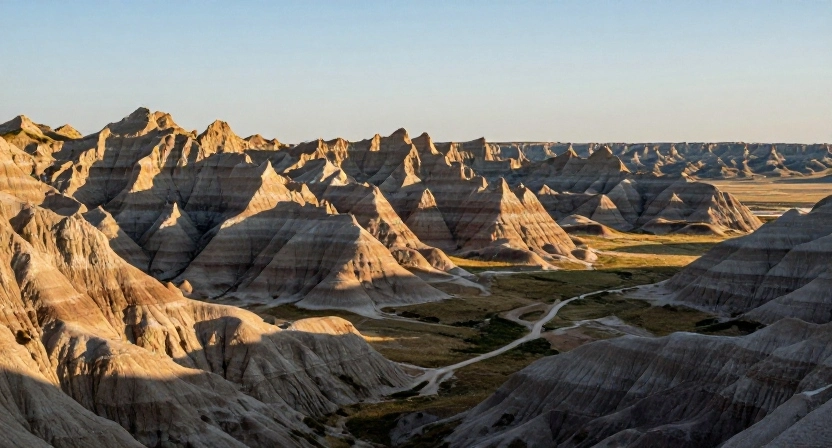
4. Bryce Canyon National Park, Utah
Bryce Canyon looks as though someone carved an enormous amphitheater out of orange, pink, and cream-colored stone and filled it with thousands of narrow towers. Those towers are called hoodoos, and Bryce Canyon contains the world's largest concentration of them. The geology behind the spectacle is a lesson in how small processes can produce huge landscapes. Ancient sediments accumulated in a lake and floodplain environment. Later, tectonic forces uplifted the region. Once the rocks were exposed, water and repeated freezing and thawing began breaking them apart. Freeze-thaw weathering is particularly important here. Water enters small cracks in the rock, freezes, expands, and gradually widens those cracks. Rain also contributes to erosion. Over time, solid rock walls can develop windows and eventually separate into individual spires. The result is one of the most visually distinctive landscapes in the American Southwest. Bryce also demonstrates why elevation matters. Despite its desert setting, the park experiences substantial temperature variation, and winter conditions play an important role in shaping the rock. So the hoodoos are not simply "desert formations." They are the product of a particular combination of rock type, elevation, climate, water, and time.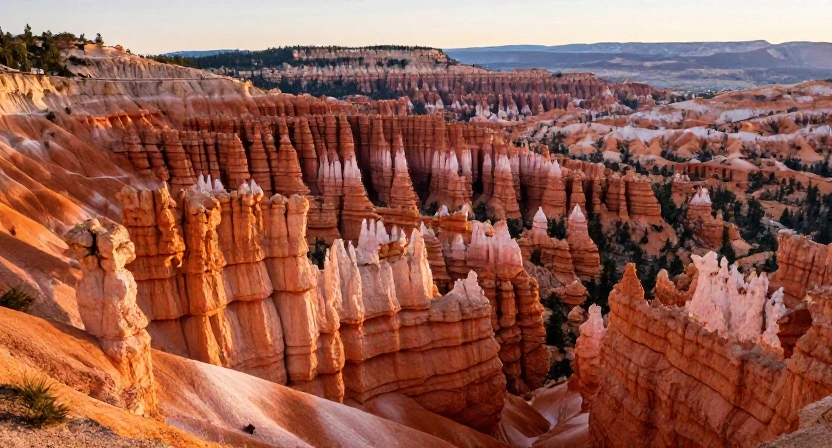
5. Death Valley National Park, California
Death Valley is often described through its extremes, but what makes it especially unusual is the sheer variety packed into one enormous desert landscape. The park contains salt flats, sand dunes, rugged mountains, volcanic features, and deeply eroded canyons. Badwater Basin sits 282 feet below sea level, while mountains rise dramatically around the valley. That extreme vertical contrast makes the landscape feel unusually compressed. From one viewpoint, you can see an environment that ranges from a below-sea-level basin to towering mountain terrain. At Mesquite Flat Sand Dunes, wind moves sand derived from eroding mountains. The surrounding mountains help trap that sand, allowing dunes to form instead of simply blowing away. Badwater Basin offers a completely different visual experience. Its salt crust is associated with the evaporation of water in an enclosed basin, leaving minerals behind. The resulting geometric patterns can make the ground appear almost artificial. Death Valley also demonstrates that "desert" does not mean "empty." The park contains a complex geological and ecological history, including rocks dating back billions of years and evidence that parts of the region were once covered by ancient seas. The lesson is useful for understanding many American deserts: the scenery we see today is the latest chapter of a much longer geological story.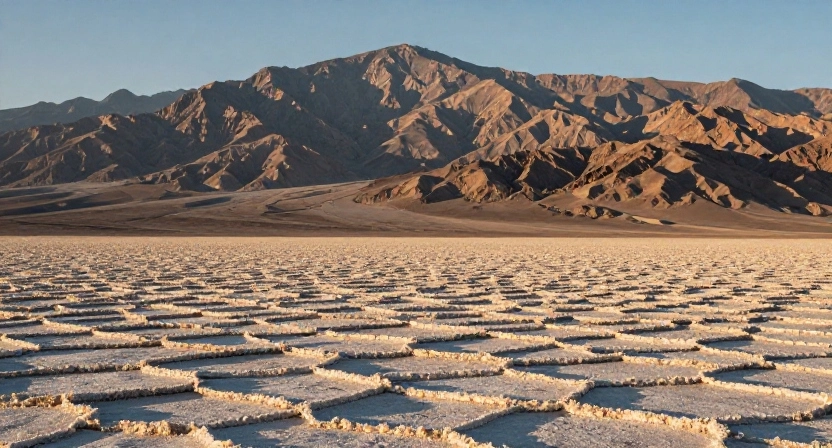
6. Goblin Valley State Park, Utah
Goblin Valley has a fitting name: the park is filled with thousands of unusual rock formations that can resemble small stone figures. The formations are hoodoos, although Utah's State Parks notes that visitors commonly call them "goblins." They developed through erosion of relatively soft rock, with harder layers providing protection in certain areas. Unlike Bryce Canyon, where hoodoos form dense vertical walls and amphitheaters, Goblin Valley is much more open and intimate. Visitors can walk among many of the formations rather than simply viewing them from a rim. That changes the experience. Instead of looking at an alien-looking landscape from a distance, you can move through it. The Valley of Goblins covers nearly three square miles and is largely free-roaming, while the park also has marked trails. This makes it particularly appealing for travelers who enjoy exploring unusual terrain without needing a technical climbing background. The formations also illustrate an important geological principle: landscapes do not need dramatic volcanic eruptions or massive earthquakes to become extraordinary. Ordinary erosion, acting on rocks with different levels of resistance, can produce remarkably strange results.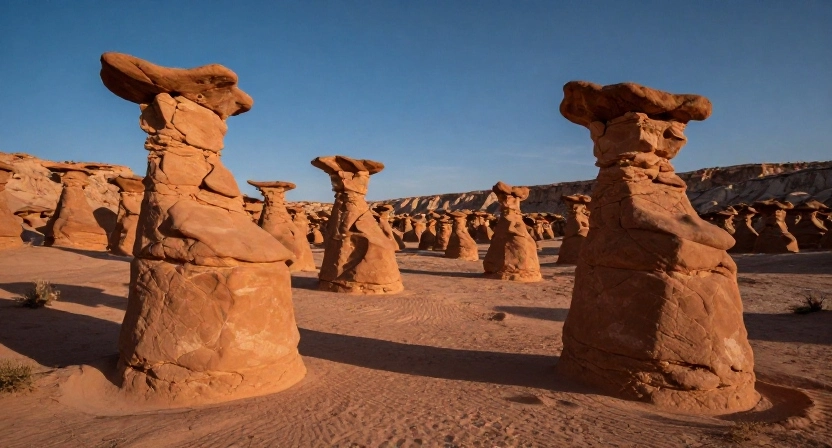
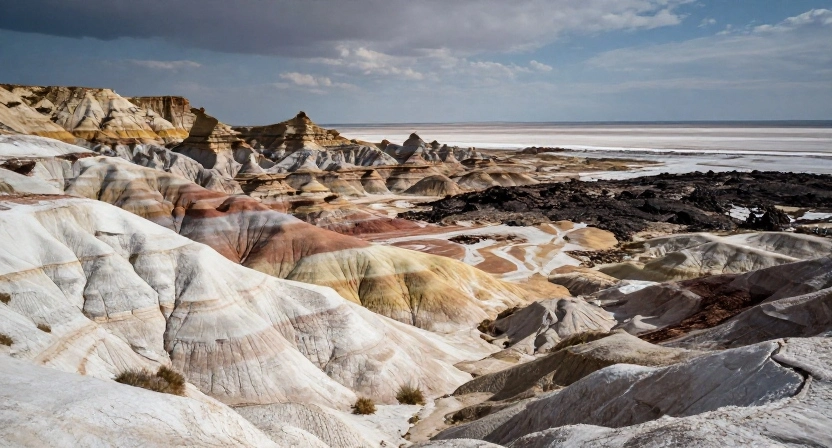
7. Painted Hills, Oregon
The Painted Hills in central Oregon look almost too orderly to be natural. Curving bands of red, gold, yellow, brown, and dark tones sweep across rounded hills. They are part of John Day Fossil Beds National Monument, a region recognized for both its fossils and its unusually colorful geology. The colors are tied to different layers of ancient soils and sediments, with changes in minerals and environmental conditions influencing the appearance of the exposed landscape. Moisture can also affect how vivid the bands appear, which means the hills can look different depending on weather and season. That variability is part of their appeal. The Painted Hills are not simply red rocks in a desert. Their colors preserve clues about environmental conditions that existed in Oregon millions of years ago. The broader John Day region also has deep connections to Indigenous history. The area was home to Native peoples, including the Umatilla, Northern Paiute, Tenino, and Cayuse, long before the monument was established. For visitors, the Painted Hills are a reminder that geology can preserve information about both ancient landscapes and ancient life. The colorful scenery is beautiful on its own, but the scientific story underneath it makes the destination much more meaningful.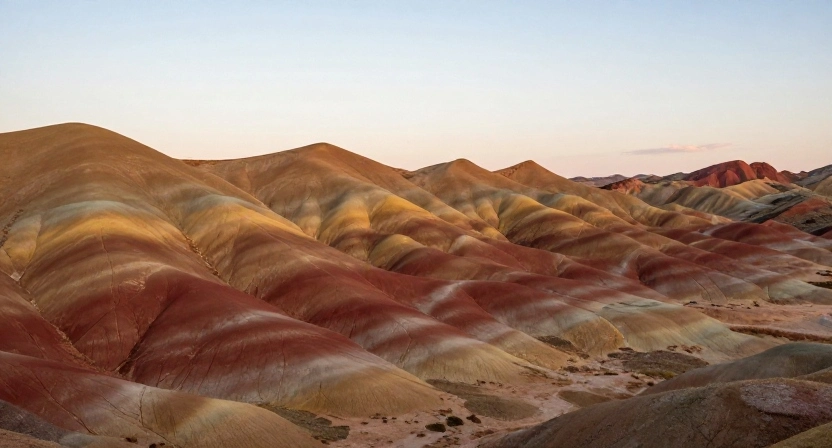
8. Petrified Forest National Park, Arizona
Petrified Forest National Park combines two landscapes that already look unusual on their own: the colorful Painted Desert and enormous pieces of fossilized wood. The "wood" is no longer ordinary. Over geological time, mineral-rich groundwater moved through buried trees and replaced much of their original material with minerals, preserving the shape and structure of the ancient trees as stone. Some fossil logs in the park are remarkably large, and their colors can be striking because of different minerals incorporated during fossilization. The surrounding Painted Desert is equally important. Its multicolored badlands, mesas, and buttes formed largely from sedimentary rocks deposited in an ancient river basin during the Late Triassic. That means a single visit can connect modern scenery with a world more than 200 million years old. The park is especially interesting for travelers who enjoy the overlap between geology and paleontology. It is not simply a place where old trees turned to stone. The rocks and fossils together preserve evidence of ecosystems from a period often described as the "dawn of dinosaurs."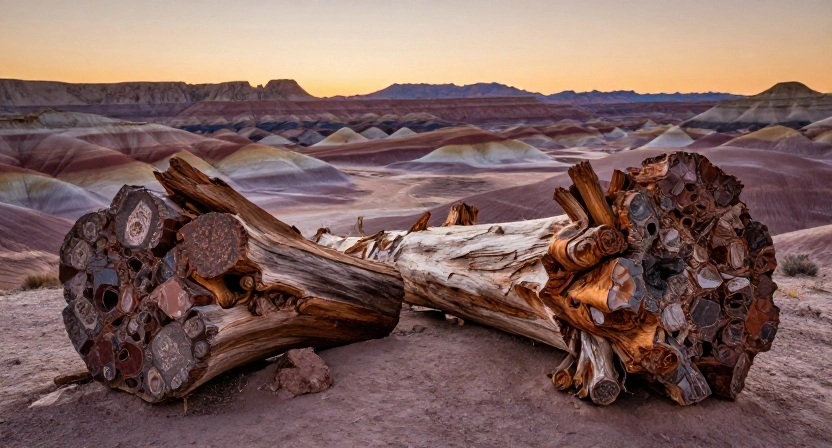
9. Craters of the Moon National Monument, Idaho
Southern Idaho's Craters of the Moon may be the closest thing on this list to a science-fiction landscape. Black and dark-gray lava flows spread across the Snake River Plain, interrupted by cinder cones, volcanic vents, fissures, caves, and rough volcanic textures. The landscape was formed by repeated volcanic eruptions that produced different types of basaltic lava flows. Some lava traveled through channels that later hardened on the surface while molten lava continued moving underneath. When the lava drained away, it left behind lava tubes and caves. The result is a landscape where the ground itself seems to have been frozen in motion. Craters of the Moon preserves one of the largest young basaltic lava fields in the contiguous United States. Its relatively dry climate and slow weathering help preserve many volcanic features remarkably well. Visitors can explore trails, caves, and overlooks, particularly around the Loop Road. Some lava formations are surprisingly fragile, so staying on designated routes is important. What makes this destination especially compelling is that the alien appearance has a straightforward explanation: it is a landscape built by volcanic processes rather than carved primarily by erosion.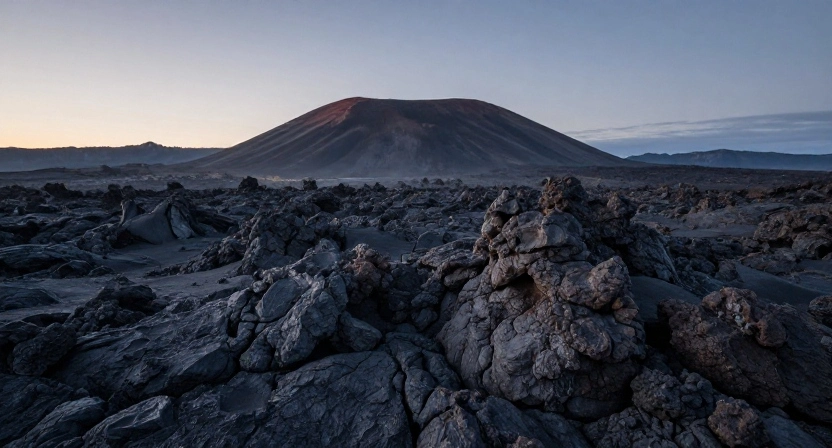
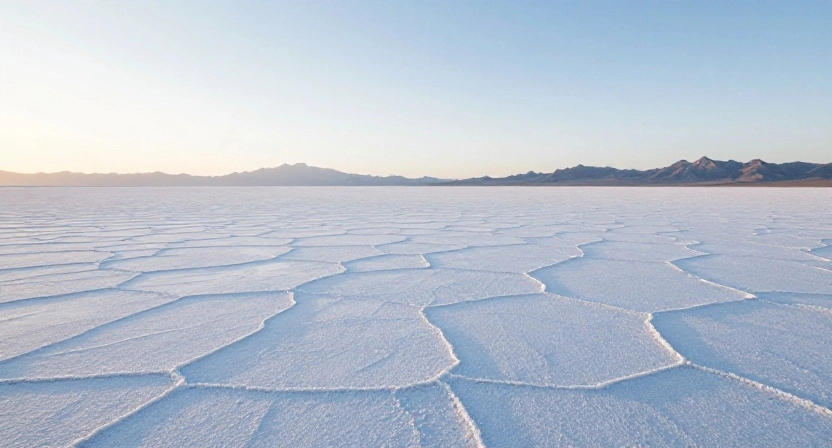
10. Bonneville Salt Flats, Utah
The Bonneville Salt Flats are among the simplest landscapes to describe and one of the strangest to experience. For miles, a hard white salt crust stretches across northwestern Utah, creating a nearly featureless horizon that can resemble a giant frozen lake or an enormous sheet of ice. The salt flats are remnants of ancient Lake Bonneville, a vast prehistoric lake that covered much of the Great Basin. As the lake disappeared, minerals remained behind and accumulated into the salt crust seen today. The Bonneville Salt Flats cover about 30,000 acres and are roughly 12 miles long and 5 miles wide. Their unusual surface has also made the area famous in automotive history, particularly for land-speed racing. Yet the real fascination is geological. A place that looks almost empty is actually a physical record of a dramatically different climate and landscape. It is a useful reminder that some of America's most unusual destinations are not unusual because something recently happened there. They are unusual because the landscape preserves evidence of something that happened thousands of years ago.