
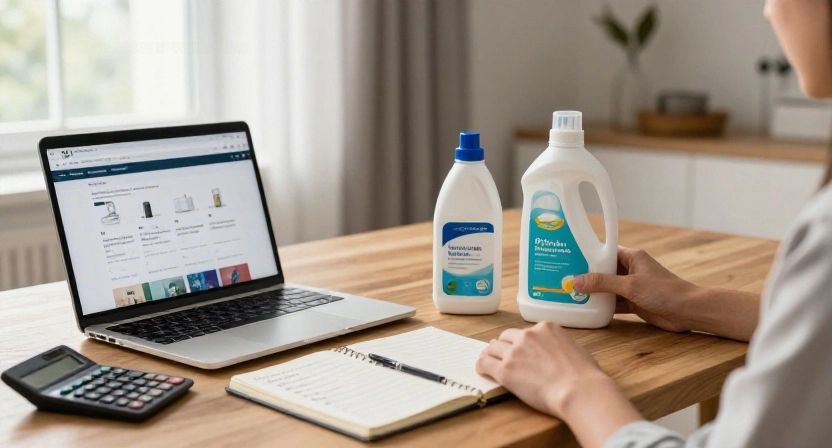
1. Identify the Problem Before Looking for a Product
The most important buying decision often happens before you compare a single product. You need to understand exactly what you want to solve. Shopping without a clearly defined need makes you more vulnerable to attractive packaging, clever advertising, and unnecessary features. A product can seem useful while you browse, even if you rarely encounter the problem it claims to fix. Consider someone who works from home and wants to become more active. They might start researching a full-sized treadmill, an under-desk walking pad, a stationary bike, and a fitness tracker. All four products can support different fitness goals, but they solve different problems and require different levels of space, money, and commitment. The better starting point is a question: What specific change am I trying to make? If the goal is to walk more during the workday without leaving a desk, a compact walking pad may be worth investigating. If the goal is running regularly, that same product might not meet the person's needs.Turn a vague desire into a specific requirement
Before shopping, write down three things:- The problem: What inconvenience, limitation, or unmet need am I trying to address?
- The intended use: Where, how often, and under what conditions will I use the product?
- The essential result: What must the product do for me to consider it a successful purchase?
2. Set a Realistic Budget Before Comparing Options
A budget is not simply a spending limit. It is a way to define what good value means for your situation. Without a predetermined limit, shoppers can gradually move from a $50 option to a $90 option, then to a $150 model because each upgrade appears to offer something better. The final purchase may be far more expensive than originally intended, even when the extra features provide little practical benefit. Start by deciding what you can comfortably spend without interfering with essential expenses or other financial priorities. Then separate your budget into two categories: the maximum amount you can afford and the amount you would prefer to spend. For example, suppose you need a desk lamp for occasional evening work. You might be willing to spend $60, but a reliable $30 lamp could already provide suitable brightness, adjustable positioning, and the type of light you need. Spending the full $60 simply because the money is available does not automatically improve the decision.Calculate the total cost, not just the advertised price
The amount displayed on a product page may not represent what ownership will actually cost. Depending on the product, additional expenses can include:- Shipping, delivery, or installation fees.
- Batteries, filters, replacement parts, or proprietary accessories.
- Subscription plans or paid software features.
- Maintenance, cleaning supplies, and repairs.
- Return shipping or restocking charges, where applicable.

3. Separate Essential Features From Attractive Extras
Product descriptions are designed to make features sound appealing. But a feature is valuable only when it helps you accomplish something you actually care about. A laptop advertised with a premium display, advanced graphics, and extensive connectivity might be excellent for a video editor. Someone who mainly uses email, spreadsheets, and a web browser may gain little from paying extra for those capabilities. This is why a feature checklist is more useful than a long list of specifications. Divide potential features into three groups:| Feature category | What it means | How to evaluate it |
| Essential | Necessary for your intended use | Reject products that lack it |
| Useful | Improves convenience or performance | Pay more only if the benefit matters |
| Optional | Interesting but unnecessary | Do not let it drive the decision |
Watch out for feature inflation
Feature inflation happens when shoppers gradually convince themselves that more capabilities must mean a better product. The difficulty is that every additional feature can introduce complexity. A device with numerous settings may take longer to learn, require more maintenance, or include functions that remain unused. Before paying for an upgrade, ask: Would I deliberately use this feature during a normal week? If the honest answer is no, treat it as a bonus rather than a reason to spend more. This small habit helps prevent overbuying while keeping your attention on the features that affect everyday satisfaction.4. Compare Products Using the Same Criteria
Comparing products becomes confusing when each brand emphasizes different strengths. One listing may highlight performance, another may focus on design, and a third may advertise a large discount. Instead of comparing marketing messages, compare the same practical criteria across every option. Start with three to five products that meet your essential requirements. For each one, examine:- Whether it fits your intended use.
- Build quality and expected durability.
- Ease of use and maintenance.
- Warranty coverage and customer support.
- Total ownership cost.
- Return policy and important limitations.
Compare specifications that affect real use
Specifications are useful when they connect directly to a practical need. A battery's stated capacity, a vacuum's dimensions, or a monitor's resolution can help narrow the choices, but specifications alone do not guarantee a satisfying experience. Check whether the manufacturer describes the conditions under which performance figures were measured. Battery life, for example, can vary with screen brightness, workload, settings, and other factors. A published maximum may not reflect typical use. When a specification is unclear, look for the product manual, detailed manufacturer documentation, or independent evaluations that explain the testing conditions. The best comparison is not the one with the most numbers. It is the one that helps you predict how the product will perform in your actual routine.5. Read Reviews Without Being Misled
Customer reviews can reveal practical details that product descriptions leave out. Buyers may mention uncomfortable handles, confusing controls, difficult assembly, weak battery performance, or problems that appear after several months. However, reviews are not a perfect measure of quality. Some reflect unusual expectations, while others may be incentivized, unreliable, or based on limited use. A five-star rating does not necessarily mean a product will suit you, and a handful of negative reviews does not automatically make it a poor purchase.Look for patterns rather than isolated complaints
Read a mix of positive, average, and negative reviews. Pay special attention to recurring issues that relate to your intended use. Suppose several buyers praise a portable vacuum's suction but repeatedly complain that the dust container is difficult to empty. That limitation might be minor for occasional car cleaning but frustrating if you plan to use it every day. Look for details about the reviewer's circumstances, the length of ownership, and the specific problem encountered. A complaint about a product being too small is less concerning if the buyer misunderstood its dimensions, but repeated reports of a component breaking may deserve closer investigation. Where available, examine recent reviews alongside older ones. Product designs, manufacturing processes, and included accessories can change over time, so feedback about an older version may not accurately describe the current model. It also helps to check more than one source. Manufacturer websites, independent reviewers, and retailer feedback can provide different perspectives, although each source has its own limitations.Be cautious with unusually persuasive reviews
Watch for repetitive wording, vague praise, reviews that focus on delivery rather than performance, or clusters of feedback that appear disconnected from actual product use. These signals do not prove that a review is fake. They simply suggest that you should seek more specific evidence before trusting it. The most useful reviews explain what happened, under what conditions, and why the experience mattered.
6. Understand What a Discount Really Means
A discount can create a sense of urgency that makes careful comparison feel unnecessary. A product marked down from $200 to $120 appears to offer substantial savings, but the relevant question is whether the product is worth $120 to you. An advertised original price is not, by itself, proof that the item is a bargain. Pricing practices vary across retailers, and reference prices can be difficult to interpret without a meaningful comparison. Before buying a discounted product, check the current price of comparable models, the product's actual capabilities, and whether the same item has been available at a similar price elsewhere. Also consider whether you would have purchased it without the discount. If the answer is no, the promotion may be creating demand rather than helping you meet an existing need.Calculate savings against a realistic alternative
Imagine that a kitchen appliance costs $80 after a discount, while a simpler alternative costs $55 and performs the tasks you need. The discounted model may have a lower advertised price than its stated original price, but the simpler product could still be the better value. A discount matters only when it reduces the cost of something worth buying. For nonurgent purchases, a waiting period can help. Save the product, step away, and return to it after a day or two. This gives you time to compare alternatives and decide whether the need is genuine. Limited-time offers are not always misleading, but a deadline should not replace careful judgment.7. Check Durability, Warranty, and Return Policies
The cheapest product is not necessarily the least expensive to own. If it fails early, performs poorly, or cannot be repaired, replacing it may cost more than choosing a better-built alternative initially. Durability is not always easy to determine before purchase, especially for unfamiliar brands. Look for credible long-term reviews, information about replacement parts, construction details, and evidence that the manufacturer provides ongoing support. A warranty can also matter, but its value depends on what it covers. Check the warranty period, exclusions, repair process, shipping responsibilities, and whether labor and parts are included. A longer warranty is not automatically better if the coverage is limited or difficult to use. Return policies deserve equal attention. Before ordering, verify the deadline, condition requirements, possible fees, and whether the seller or manufacturer handles returns. For large or expensive purchases, these details can significantly affect your financial risk. (FTC Online Shopping Guide) In the United States, warranty protections and return rights can vary by product, seller, state law, and purchase circumstances. Do not assume every store must accept an unwanted item simply because you changed your mind. For electronics, appliances, furniture, and other costly purchases, checking these details before checkout can prevent an inexpensive-looking decision from becoming an expensive inconvenience.8. Choose the Best Value, Not Automatically the Cheapest or Most Expensive
Price is only one part of value. A product's usefulness depends on the relationship between its cost, performance, reliability, and suitability for your needs. Consider three hypothetical electric toothbrushes. The least expensive model provides the brushing functions you need. A midrange model adds a pressure sensor and a convenient charging system. A premium model includes app connectivity and several additional modes. If you want basic brushing functionality, the least expensive option may be sufficient. If a pressure sensor would help you avoid brushing too aggressively, the midrange option might justify its extra cost. If you are unlikely to use the app or additional modes, the premium model may offer little additional value. The right choice depends on your priorities, not the product's position in the price range. A useful way to evaluate value is to ask four questions:- Does it solve my original problem?
- Does it meet my essential requirements?
- Is the additional cost justified by benefits I will actually use?
- Am I comfortable with the product's limitations and ongoing expenses?

9. Avoid Buying Products You Will Rarely Use
One of the most overlooked shopping costs is unused ownership. A specialized kitchen gadget may promise to make cooking easier, a home fitness device may appear to solve a motivation problem, and a new organizational product may suggest that a cluttered room simply needs better equipment. Yet owning a tool does not guarantee that you will change your habits. Before purchasing a product for a new routine, consider whether you have a realistic plan to use it. If possible, borrow the item, try a low-cost alternative, or use equipment you already own to test whether the activity fits your life. For example, someone interested in home workouts could begin with bodyweight exercises before purchasing several pieces of equipment. If they discover that they enjoy training consistently, they will have better information about which equipment is worth buying. This approach does not mean avoiding useful purchases. It means waiting until you understand the need well enough to make a targeted decision.10. Use a Simple Pre-Purchase Checklist
After comparing options, take a final moment to review the decision. This is especially useful for purchases that are expensive, difficult to return, or likely to involve recurring costs. Before checking out, confirm that:- I can clearly explain why I need this product.
- It meets my essential requirements.
- I compared it with at least two reasonable alternatives when practical.
- I checked meaningful customer feedback and product limitations.
- I understand the full cost, including likely ongoing expenses.
- I reviewed the warranty and return policy where relevant.
- I am not buying it solely because of a discount, trend, or advertisement.
- I have considered whether an existing item or simpler solution would work.